
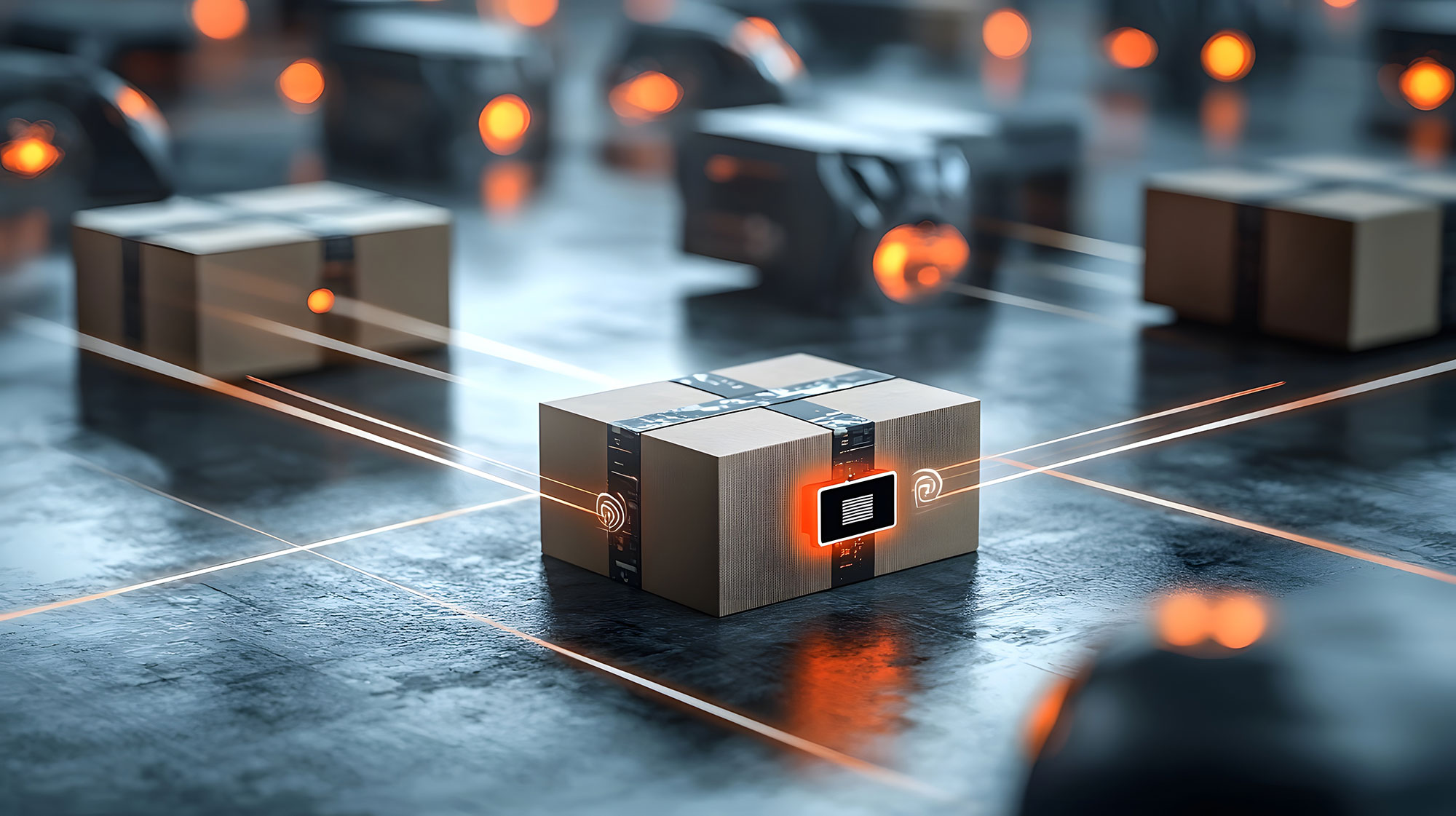
The warehouse and logistics industry is witnessing a fundamental shift in how goods are tracked, verified, and managed. What was once considered cutting-edge technology is rapidly becoming the standard: the integration of Radio Frequency Identification (RFID) with computer vision systems. This powerful pairing is transforming operations from receiving docks to final mile delivery, and companies that haven’t adopted this architecture are finding themselves at a competitive disadvantage.
Why the Pairing Makes Perfect Sense
RFID and computer vision are complementary technologies that address different aspects of the same challenge: achieving complete visibility and accuracy in warehouse operations.
RFID excels at:
- Rapid, simultaneous scanning of multiple items
- Reading tags without line-of-sight requirements
- Tracking items through various stages of the supply chain
- Providing unique identification for individual products
Computer vision excels at:
- Visual verification of product condition and packaging integrity
- Dimensional analysis for storage optimization
- Barcode and label reading in challenging orientations
- Detecting anomalies and quality issues
When combined, these technologies create a robust system that validates data from multiple sources, dramatically reducing errors and providing unprecedented operational intelligence.
The Evolution to Standard Architecture
Five years ago, implementing RFID and computer vision together was a significant undertaking reserved for Fortune 500 companies with substantial technology budgets. Today, the landscape has changed dramatically:
Cost Reductions: RFID tag prices have decreased while read accuracy has improved. Computer vision hardware and AI processing capabilities have become more affordable and powerful, with edge computing solutions bringing costs down further.
Mature Integration Platforms: Modern warehouse management systems (WMS) and enterprise resource planning (ERP) platforms now include native support for both RFID and vision systems, eliminating much of the custom integration work that was previously required.
Proven ROI: Early adopters have demonstrated clear returns on investment, with typical payback periods of 18-24 months through reduced labor costs, improved inventory accuracy, and decreased shrinkage.
Real-World Applications Driving Adoption
Receiving and Putaway
Computer vision systems capture images and dimensions of incoming pallets while RFID readers simultaneously verify contents against purchase orders. This dual verification catches discrepancies immediately, whether it’s incorrect quantities, damaged goods, or mis-shipped items.
Inventory Management
RFID-enabled cycle counting combined with vision-based verification allows warehouses to maintain 99%+ inventory accuracy without the labor-intensive processes of the past. Computer vision can confirm that the right products are in the right locations, while RFID provides real-time quantity tracking.
Picking and Packing
Vision systems guide workers to correct pick locations and verify items placed in orders, while RFID confirms that all tagged items have been included. This redundancy virtually eliminates picking errors, a critical capability as customer expectations for order accuracy continue to rise.
Shipping Verification
Before trucks leave the dock, computer vision systems can verify load configuration and detect potential stability issues, while RFID provides a final electronic manifest verification, ensuring the right products are going to the right destinations.
The Technology Stack
A typical RFID and computer vision implementation in modern warehouses includes:
Hardware Layer:
- Fixed and mobile RFID readers at strategic checkpoints
- Overhead and handheld camera systems
- Edge computing devices for local processing
- Integration with existing conveyor systems, sortation equipment, and mobile devices
Software Layer:
- AI/ML models for image recognition and anomaly detection
- RFID middleware for tag data management
- Integration APIs connecting to WMS, ERP, and transportation management systems (TMS)
- Analytics platforms for operational insights
Network Infrastructure:
- High-bandwidth wireless networks (Wi-Fi 6/6E)
- 5G connectivity for mobile applications
- Cloud connectivity for centralized data management
Overcoming Implementation Challenges
While the technology has matured, successful implementation still requires careful planning:
Tag Placement and Reading: Not all products tag equally well. Working with experienced integrators who understand material properties, tag orientation, and reader placement is essential for achieving target read rates.
Lighting Considerations: Computer vision performance depends heavily on consistent, appropriate lighting. Warehouse environments often require lighting upgrades or specialized illumination at camera locations.
Data Management: The combination of RFID and vision systems generates substantial data volumes. Organizations need strategies for data filtering, storage, and analysis to extract value without overwhelming systems.
Change Management: Success depends on operator buy-in. Training programs and clear communication about how the technology supports workers rather than replaces them are critical.
The Competitive Imperative
The question is no longer whether to implement RFID and computer vision integration, but how quickly it can be deployed effectively. Companies operating without this technology face:
- Higher labor costs for inventory management and quality control
- Increased error rates in picking and shipping
- Slower response times to inventory discrepancies
- Reduced visibility into supply chain operations
- Difficulty meeting customer expectations for order accuracy and delivery speed
Meanwhile, competitors with integrated RFID and vision systems are achieving:
- Labor productivity improvements of 25-40% in key processes
- Inventory accuracy rates exceeding 99.5%
- Near-elimination of mis-ships and picking errors
- Real-time visibility enabling more responsive operations
- Enhanced ability to offer value-added services like serialized tracking
Looking Ahead
The RFID and computer vision pairing will only become more sophisticated. Emerging developments include:
Advanced AI Capabilities: Machine learning models that can predict equipment failures, optimize storage locations, and identify process bottlenecks before they impact operations.
Expanded RFID Applications: Beyond simple tracking, RFID sensors that monitor temperature, shock, and other environmental factors for sensitive products.
Augmented Reality Integration: Vision systems providing real-time guidance to workers through AR displays, combining the efficiency of automation with human flexibility.
Digital Twin Integration: RFID and vision data feeding digital twin models that enable simulation and optimization of warehouse operations.
Moving Forward with ProVision Automation
At ProVision Automation by Ahearn & Soper Inc., we’ve been at the forefront of integrating RFID and computer vision technologies for warehouse and logistics applications. Our experience across diverse industries has given us deep insights into what works, what doesn’t, and how to maximize ROI from these investments.
Whether you’re considering your first implementation or looking to expand existing capabilities, the time to act is now. The technology is proven, the business case is clear, and the competitive pressure is real.
The question isn’t whether RFID and computer vision integration will become standard in your operation, it’s whether you’ll be leading the transition or struggling to catch up.
Ready to explore how RFID and computer vision integration can transform your warehouse operations? Contact ProVision Automation by Ahearn & Soper Inc. to discuss your specific challenges and opportunities. Our team brings decades of automation expertise and a track record of successful implementations across the logistics industry.
 EN
EN  FR
FR