Serialization and Lot-Tracking Labeling: Where the Physical Label Becomes the Compliance Risk
From unique serial numbers to reliable scanning, physical labels are the critical last mile of successful serialization compliance.
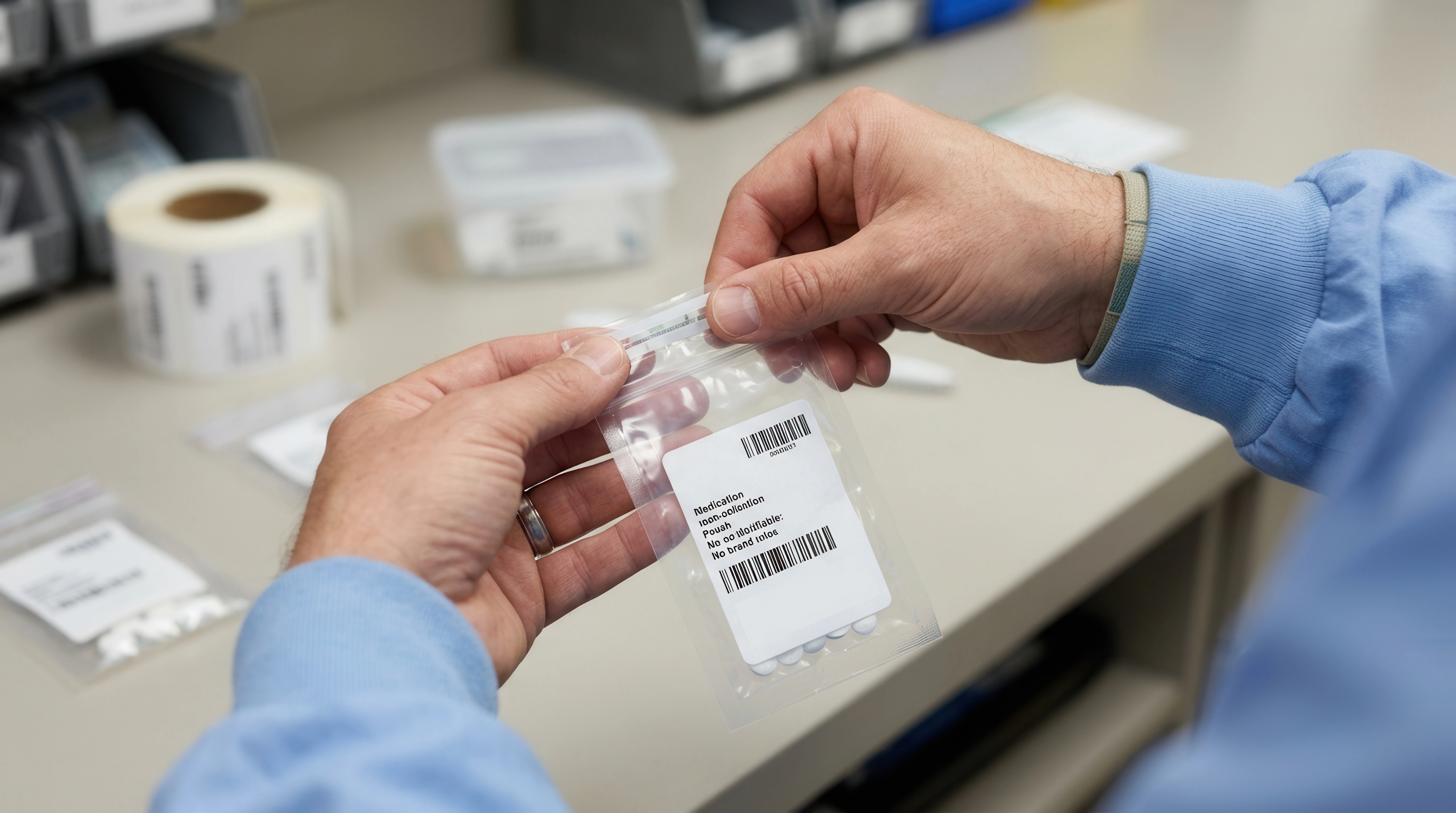
Serialization compliance projects tend to get planned as software and systems problems, track-and-trace platforms, EPCIS data exchange, ERP integration. All of that is genuinely necessary. But serialization ultimately lives or dies on a physical label: a unique serial number must be encoded correctly, printed at high enough quality to scan reliably, and remain scannable through every handoff the product goes through. That last mile is where well-architected serialization programs still fail in practice.
What serialization requires, in the US and beyond
DSCSA (US pharmaceuticals) requires unit-level serialization, a GS1 DataMatrix barcode encoding the product's GTIN, lot number, expiration date, and a unique serial number, plus interoperable electronic data exchange between trading partners using standards like EPCIS. Enforcement has moved through staggered deadlines by trading-partner type, with manufacturers, wholesale distributors, and large dispensers now fully in scope, and small dispensers following. The current requirement set is straightforward to state and demanding to execute transact only with verified trading partners, handle only product carrying a valid product identifier, and exchange transaction data electronically at the package level.
Global equivalents follow similar logic with different specifics. The EU Falsified Medicines Directive (FMD) has required pharmaceutical serialization since February 2019, using the same GS1 DataMatrix format but exchanged through a different verification infrastructure (the EU Hub and national medicines verification systems). Other markets, Brazil, Saudi Arabia, and others, have their own serialization mandates, generally built on the same core GS1 data elements even where reporting timing and infrastructure differ. Manufacturers selling into multiple markets often end up maintaining several parallel serialization data streams that must all originate from the same physical print event.
Food traceability (FSMA 204) uses a related but distinct concept, traceability lot codes tied to Critical Tracking Events, rather than individual unit serialization, but the underlying labeling challenge is the same: a code assigned in software has to survive as a scannable physical mark all the way through the supply chain.
Where serialization programs break
Aggregation errors: Serialization isn't just printing a unique code on each unit, many programs require aggregation, linking unit-level serial numbers to the case and pallet they're packed into, so a single case scan can verify its full contents. A mismatch between what the system believes is aggregated and what's physically packed creates a data integrity problem that can take significant investigation time to untangle, and it typically surfaces at the worst possible moment: a customer's receiving dock or a regulatory inspection.
Print quality drift at serialization speed: High-speed serialization lines print unique codes continuously, which means any gradual print-quality degradation, printhead wear, ribbon inconsistency, doesn't fail once; it can fail on an increasing percentage of units over a production run, sometimes going undetected until a batch reaches a downstream scan point that catches what an upstream check missed.
Verification systems not actually catching what they're supposed to catch: A verification system checking "is a barcode present" is different from one checking "does the printed barcode's data match the system-generated serial number, and does it meet ISO/IEC 15416 grading." Programs that implement only the first check have a false sense of security about serialization integrity.
Suspect product investigation timelines: Under DSCSA, trading partners must investigate and, where appropriate, report suspect or illegitimate product within defined timeframes, as tight as 24 hours for an illegitimate product determination. An organization without a fast, reliable way to verify a specific serialized unit's authenticity and history is working against a clock that regulators do not extend.
Building a serialization labeling process that holds up
- Verify data-to-print match, not just barcode presence. Confirm that what's physically printed matches the system-generated serial number, lot, and expiration data, a distinct check from confirming a barcode simply scans.
- Apply barcode grading (ISO/IEC 15416) at serialization speed, in-line, not as a post-hoc sample check, since print-quality drift at high throughput can affect an increasing share of units over a run.
- Reconcile aggregation data against physical pack contents at defined intervals, not only at initial system qualification, but physical packing errors also happen even when the encoding logic is correct.
- Build a fast suspect-product investigation workflow that can pull a specific serialized unit's full history quickly enough to meet DSCSA's reporting timeframes, rather than discovering during an actual event that the process takes days instead of hours.
- Include serialization printing and verification equipment in your validated computer systems inventory and change-control process, a recurring inspection finding is serialization systems that were implemented without being brought under the same quality oversight as other validated systems.
FAQ
What's the difference between serialization and aggregation?
Serialization assigns a unique identifier to each individual unit. Aggregation links those unit-level serial numbers to the case and pallet they're packed into, allowing a single case-level scan to verify the specific units it contains, a separate data relationship that has to stay accurate as physical packing occurs.
Do all pharmaceutical trading partners have the same DSCSA deadlines?
No, deadlines have been staggered by trading-partner type, with manufacturers, wholesale distributors, and large dispensers reaching full enforcement earlier, and small dispensers (25 or fewer pharmacists/technicians) given a later date.
Why would a correctly encoded serial number still cause a compliance problem?
If the physical print quality degrades, due to printhead wear, ribbon issues, or label material variation, the printed barcode may not match or may not reliably scan, even though the underlying system correctly generated the serial number. Data correctness and print quality are two different failure points that both need to be verified.
Ahearn & Soper's barcode verification and print-and-apply automation systems help pharmaceutical manufacturers maintain serialization integrity from data generation through physical print. Explore barcode verification or learn about our automated print & apply systems.
Articles you might read next
Three more reads on accuracy, labelling, traceability and the systems underneath them.



Ready to talk about your operation?
Tell us what your warehouse has to do, and we will tell you plainly whether we can help.