Synthetic labelling for Tier III and IV data centres in Canada
Polyester and polypropylene labels resist chemicals, moisture, abrasion and temperature extremes, keeping Tier III and IV data centre systems clearly identified for decades.
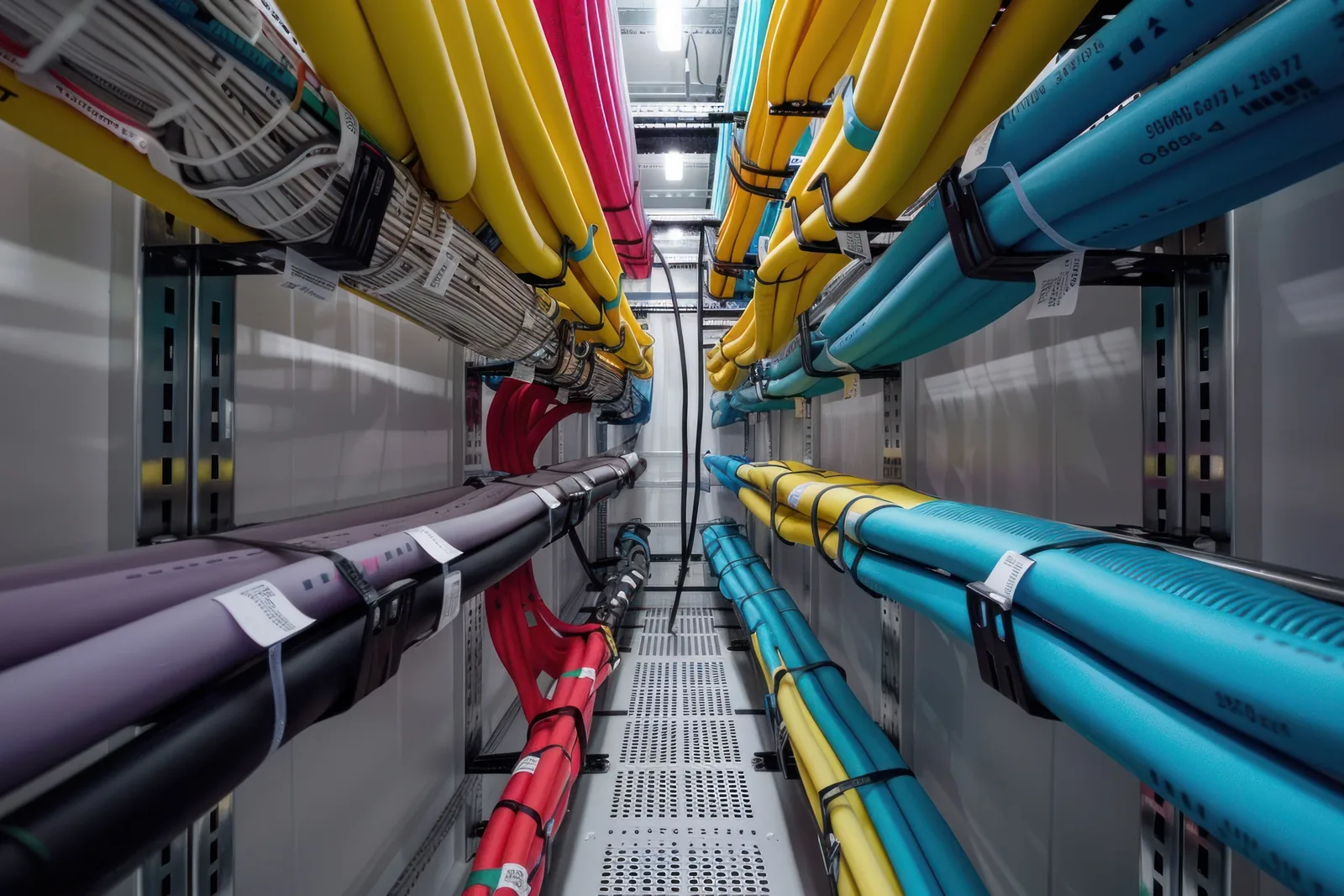
In the mission-critical world of Tier III and IV data centres, every component must perform flawlessly under extreme conditions. While servers, cooling systems, and power infrastructure receive significant attention during certification processes, one often-overlooked element plays a crucial role in maintaining operational integrity: facility labelling.
For Canadian data centres pursuing Uptime Institute Tier III (Concurrently Maintainable) or Tier IV (Fault Tolerant) certification, synthetic labels are a critical component of infrastructure reliability and safety compliance.
Key takeaways
- Extreme uptime requirements demand extreme label durability. Tier III facilities are concurrently maintainable: any component can be taken offline for planned work without affecting IT. Tier IV facilities are fault tolerant: a single equipment failure does not affect IT. When every second counts, labels must remain legible and intact for long operational lifecycles without failure during critical maintenance or emergency response situations.
- Paper labels cannot survive data centre environments. Standard paper labels fail under data centre conditions including temperature extremes, chemical exposure from fire suppression systems and cleaning agents, humidity fluctuations, condensation, and constant physical wear from cable management. These failures create safety hazards.
- Synthetic materials are non-negotiable for Tier III and IV facilities. Polyester and polypropylene synthetic labels offer superior chemical resistance, temperature stability, moisture immunity, and physical durability. These materials maintain adhesion and legibility through decades of harsh conditions. Clear, durable labelling supports the maintenance and operating procedures that Tier III and IV facilities rely on.
- Canadian facilities face additional compliance requirements. Canadian data centres must also meet CSA standards, provincial electrical codes, occupational health and safety regulations, and bilingual labelling requirements in French and English where required, for example in Quebec. Synthetic labels support all these requirements, including Canadian Electrical Code Rule 2-306, which requires shock and arc flash hazard warnings to be marked.
- Comprehensive labelling covers five critical infrastructure systems. Mission-critical facilities require durable labelling across electrical distribution (panels, UPS, generators), cooling infrastructure (chillers, pumps, piping), fire suppression systems, network/telecommunications equipment, and physical security devices. Proper synthetic labelling on all systems ensures safe operations, efficient maintenance, and regulatory compliance.
Understanding Uptime Institute Tier requirements
The Uptime Institute's tier classification system sets rigorous standards for data centre availability and operational capabilities. Tier III facilities are concurrently maintainable: any component can be taken offline for planned work without affecting IT. Tier IV facilities are fault tolerant: a single equipment failure does not affect IT. Uptime Institute does not define Tiers by uptime percentages.
These demanding standards require meticulous documentation, clear identification of all systems, and the ability to perform maintenance without service interruption. Labels serve as the frontline communication tool for technicians, emergency responders, and maintenance personnel navigating complex infrastructure during both routine operations and critical incidents.
The demanding environment of mission-critical infrastructure
Data centres present one of the most challenging environments for labelling materials:
Temperature extremes: Across a data centre site, temperatures can range from sub-zero at outdoor generators and heat rejection equipment to elevated temperatures near heat-generating equipment. Labels must maintain legibility and adhesion across this spectrum.
Chemical exposure: Cleaning agents, fire suppression systems, and coolants can degrade standard label materials. Tier III and IV facilities often deploy sophisticated fire suppression technologies that expose labels to chemical agents during system testing and actual deployments.
Humidity fluctuations: Data centres maintain strict humidity controls, but equipment rooms may experience condensation during cooling system maintenance or environmental control transitions.
Physical demands: High-traffic areas, frequent equipment moves, and cable management activities subject labels to abrasion, impact, and pulling forces that can destroy inferior labelling materials.
Long-term durability: With infrastructure designed for long operational lifecycles, labels must remain intact and legible for decades without replacement.
Why synthetic labels outperform traditional materials
Paper labels simply cannot withstand the rigours of mission-critical infrastructure. Synthetic label materials, particularly polyester and polypropylene formulations, offer superior performance across every critical dimension:
Chemical resistance: Synthetic substrates resist degradation from cleaning solvents, lubricants, and fire suppression agents commonly used in data centre environments.
Temperature stability: High-quality synthetic materials maintain dimensional stability and adhesive performance across the full range of data centre operating conditions. Premium polyester labels can be rated from -40°C to 150°C (-40°F to 302°F); polypropylene suits lower temperatures.
Moisture immunity: Unlike paper labels that absorb moisture and delaminate, synthetic labels repel water and maintain adhesion even in humid conditions or direct exposure to condensation.
Tear and abrasion resistance: The inherent strength of synthetic films prevents tearing during installation and resists wear from cable contact, equipment movement, and cleaning activities.
UV and light stability: Synthetic materials with UV-resistant coatings prevent fading and maintain barcode scannability under various lighting conditions, including areas with natural light exposure.
Critical labelling applications
Clear, durable labelling supports the maintenance and operating procedures that Tier III and IV facilities rely on. Comprehensive labelling strategies must address multiple infrastructure systems:
Electrical distribution: Circuit breakers, panels, transfer switches, UPS systems, and generator connections require clear identification to support maintenance activities and emergency response. Colour-coded synthetic labels help technicians quickly identify voltage levels, circuit functions, and safety warnings.
Cooling infrastructure: Chillers, pumps, air handlers, and distribution piping demand durable labels that survive condensation and chemical treatments. Proper labelling enables technicians to trace cooling loops and identify redundant systems during maintenance windows.
Fire suppression systems: Detection devices, suppression agent storage, distribution piping, and control panels must be clearly labelled to support both routine inspections and emergency operations.
Network and telecommunications: Cable pathways, patch panels, fibre terminations, and cross-connects require detailed labelling to maintain service continuity during moves, adds, and changes.
Physical security: Access control devices, camera systems, and intrusion detection sensors need identification labels that support rapid troubleshooting and system audits.
Meeting Canadian standards and regulations
Canadian data centres must also comply with provincial electrical codes, CSA (Canadian Standards Association) standards, and occupational health and safety regulations. These requirements often mandate specific labelling content, formats, and durability characteristics.
Synthetic labels support compliance by:
- Surviving the environmental conditions specified in CSA standards for electrical installations
- Displaying the warnings covered by Canadian Electrical Code Rule 2-306, which requires shock and arc flash hazard warnings to be marked
- Providing clear safety warnings in French and English where required, for example in Quebec
Implementation best practices
To maximize the value of synthetic labelling systems in Tier III and IV facilities:
Material selection: Choose synthetic substrates rated for your specific environmental conditions. Polyester films offer superior temperature and chemical resistance for most applications, while specialized materials may be required for extreme environments.
Adhesive systems: Select permanent acrylic adhesives formulated for challenging surfaces including powder-coated metal, textured plastics, and low-surface-energy materials common in data centre equipment.
Printing technologies: Thermal transfer printing with resin ribbons provides the most durable text and barcode images on synthetic materials, resisting solvents and abrasion better than direct thermal or laser-printed alternatives.
Information design: Incorporate both human-readable text and machine-readable barcodes or QR codes to support both visual identification and automated asset management systems.
Installation procedures: Ensure proper surface preparation and label application techniques to maximize adhesive bond strength and label longevity.
Documentation integration: Link physical labels to digital asset management systems and building information models (BIM) to support comprehensive infrastructure documentation.
The ProVision advantage
At ProVision Labels by Ahearn & Soper Inc., we understand the critical role that labelling plays in data centre operations. Our synthetic label solutions are engineered specifically for mission-critical infrastructure environments, combining advanced materials science with precise manufacturing processes.
Our data centre labelling systems feature:
- Premium synthetic substrates tested to withstand extreme data centre conditions
- Chemical-resistant adhesives that maintain bond strength through cleaning and maintenance cycles
- High-resolution thermal transfer printing for maximum durability and scannability
- Custom design services to support the maintenance and operating procedures that Tier III and IV facilities rely on and to meet Canadian regulatory requirements
- Colour-coding and safety warning formats that enhance operational safety
Whether you're pursuing initial Tier III or IV certification, maintaining existing certifications through infrastructure upgrades, or simply seeking to improve operational reliability, ProVision Labels delivers the durable identification solutions your facility demands.
Conclusion
In the unforgiving environment of Tier III and IV data centres, there's no room for labelling failures. Synthetic label materials provide the durability, chemical resistance, and environmental performance required to support the maintenance and operating procedures that Tier III and IV facilities rely on, while surviving decades of demanding operational conditions.
By investing in properly engineered synthetic labelling systems, Canadian data centre operators enhance operational safety and ensure that critical infrastructure information remains accessible when it matters most.
Ready to upgrade your data centre labelling system? Contact ProVision Labels by Ahearn & Soper Inc. to discuss your Tier III or IV labelling requirements and discover how our synthetic label solutions can support your mission-critical infrastructure.
Articles you might read next
Three more reads on accuracy, labelling, traceability and the systems underneath them.

Ready to talk about your operation?
Tell us what your warehouse has to do, and we will tell you plainly whether we can help.