 By Ahearn & Soper
Thermal labels · 25 sizes · 7 colours
Every label has one job. Scan at the far end.
A smeared barcode, a lifted corner or a jammed roll costs more than the label did. Answer six questions and we will match the size, stock, adhesive and ribbon to your printer and your surface. 4" x 6" is on our webstore now.
Five layers, top to bottom. Pick one to see what it does, or change the face colour and print method.
Why labels fail
Four ways a label fails on the floor
Most of them come from two parts that do not suit each other: the stock and the ribbon, or the adhesive and the surface. Pick a problem to see it on a carton, then switch on the fix.
The problem
Wrong core, wrong wind or a gap the sensor cannot read. The printer jams, and the printer gets the blame.
Seeing one of these now?
Send us a photo of the label and the printer model. We will tell you which of the four it is and what to change.
Send us your labelLabel matcher
Find your label in six questions
Answer one question at a time and watch your spec label fill in. Every answer explains what it changes, so you know why the label ends up the way it does.
Every size, drawn to scale
Every size we make, drawn to scale
Pick a width to line up every label that shares it on one baseline, with a 4" x 6" outline for scale. One square on the grid is one inch.
Pick a label for its technical drawing, roll formats and the fastest way to get it.
Print methods
Thermal transfer or direct thermal?
Both print with heat on the same kind of printer. The difference is a ribbon, and how long the image lasts: weeks for direct thermal, years for thermal transfer with the right stock. Colour inkjet covers labels that need colour.
On the webstore Thermal transfer | Made to order Direct thermal | Made to order Colour inkjet | |
|---|---|---|---|
| How it prints | The printhead melts ink from a ribbon onto the label. | Heat darkens a coated face stock. No ink, no ribbon. | Pigment ink on a print receptive topcoat. |
| How long it lasts | Long term, with the right ribbon and stock. | Short term. Darkens with heat and sunlight. | Long term on pigment ink and coated media. |
| Best for | Product, inventory, asset and outdoor labels | Shipping and courier labels | Product labels, warnings and logos in colour |
| Ribbon | Wax or wax/resin, 110 mm, on our webstore. Resin to order. | None | None. Ink cartridges. |
| Face stocks | Premium and Economy paper in stock. Polypropylene and polyester to order. | Direct thermal paper. Topcoated grades to order. | Matt or gloss paper, and polyester. |
| Printers | Zebra, Honeywell, TSC, Datamax and SATO thermal transfer printers | Direct thermal printers, and most thermal transfer printers without a ribbon | Colour label printers such as Epson ColorWorks |
Not sure which your printer does? Look for a ribbon spindle, or send us the model and we will tell you.
Colour codes
Seven colours. One glance tells the dock what to do.
4" x 6" comes in white and six colours on our webstore, or with your text, barcode or logo preprinted in black. Give each colour a job: a shift, a carrier, a status.
The carton waits for a check before it moves.
Your codes are yours to set. These are examples.
 Free eBookThe psychology of colour in product labelsWhat the evidence supports
Colours on screen are approximate. Ask for a sample roll to see the real stock.
Where they go
The sizes each industry reaches for first
Every floor runs a different mix of labels. Here is where each industry usually starts, and how we work with it.
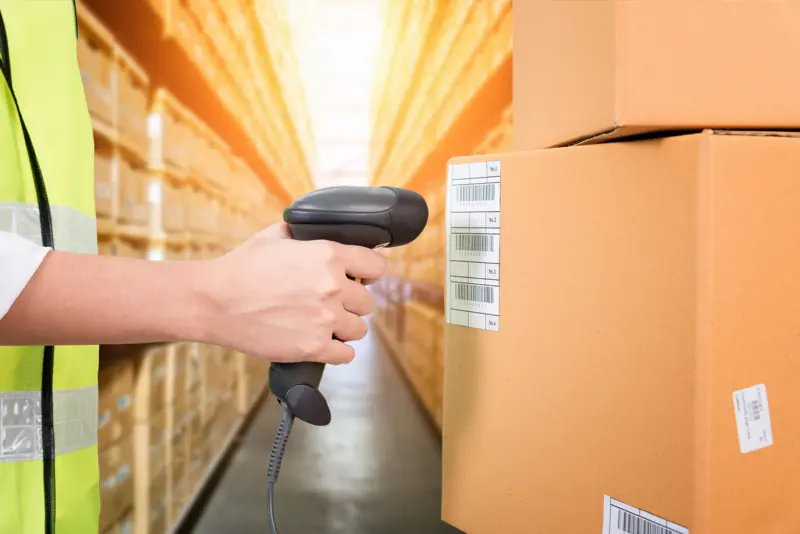 Warehouse and distribution
Every pallet, pick and shipment
Shipping labels that scan for the carrier, plus carton and location labels at every touchpoint.
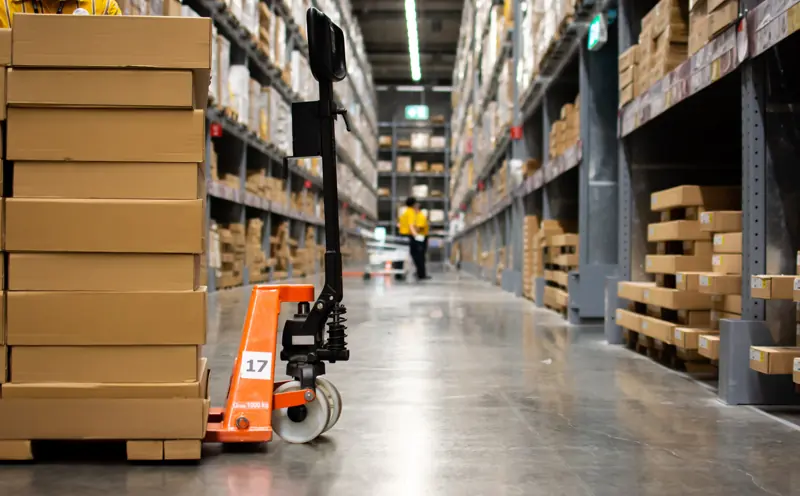 3PL and logistics
Every client's label rules
Pallet and licence plate labels that stay readable at distance and through stretch wrap.
 Manufacturing
Labels that survive the process
Work in process, product and part labels rated for heat, cold, chemicals and washdown.
 Healthcare
Small labels that still scan
Specimen, pharmacy and asset labels: often small, often cold, always legible.
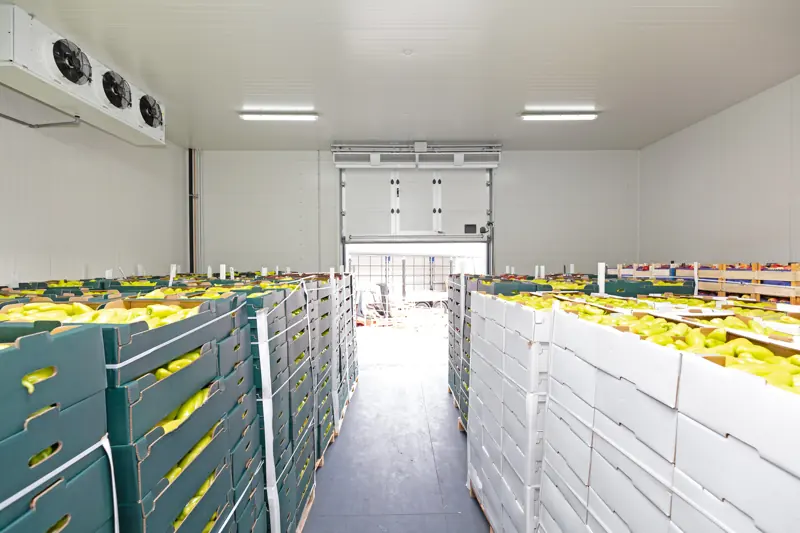 Food and beverage
Cold, damp packaging
Freezer grade labels that go on cold cartons and stay on through condensation, from receiving dock to truck.
Start from the job, not the industry
Tell the matcher how you print and where the label goes. It works the same on any floor.
Open the matcherSizes in red are named in carrier or GS1 guidance: 4" x 6" and 4" x 8" for parcel labels, 4" x 6" and 6" x 8" for GS1 logistic labels. The rest are typical starting points we confirm with you.
Not sure yet?
Run it on your printer before you buy a case.
A label is only right when it runs on your printer and sticks to your surface. These three paths take the guessing out.
Ask for a sample roll
Run it on your line, on your surface, at your speed. Then order with confidence.
Request a sampleSend us the label you use now
A part number, a photo of the roll's core label or the label itself. We will match it or tell you what to change.
Match my current labelTalk to a label specialist
Call 800-263-4258 and ask for labels. Have your printer model handy.
Free guides
Free guides from our label team
Two free eBooks and a brochure from the ProVision Labels team, built from manufacturer data sheets and checked against the source.
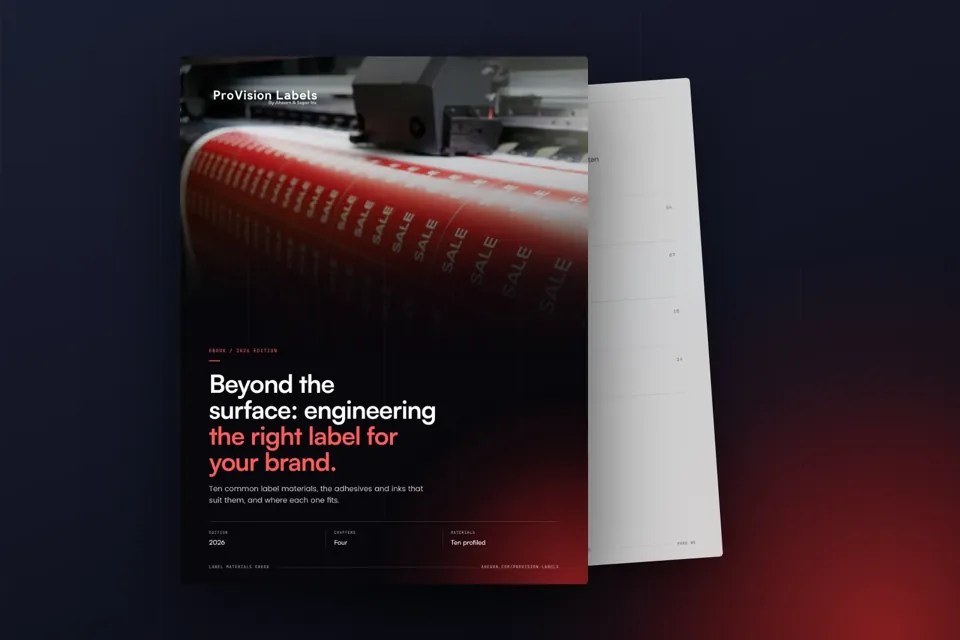
Beyond the surface: engineering the right label for your brand
Ten common label materials, the adhesives and inks that suit them, and where each one fits.
Get the free eBookThe psychology of colour in product labels
What the evidence supports, what the rules require, and how to print colour you can stand behind.
Get the free eBook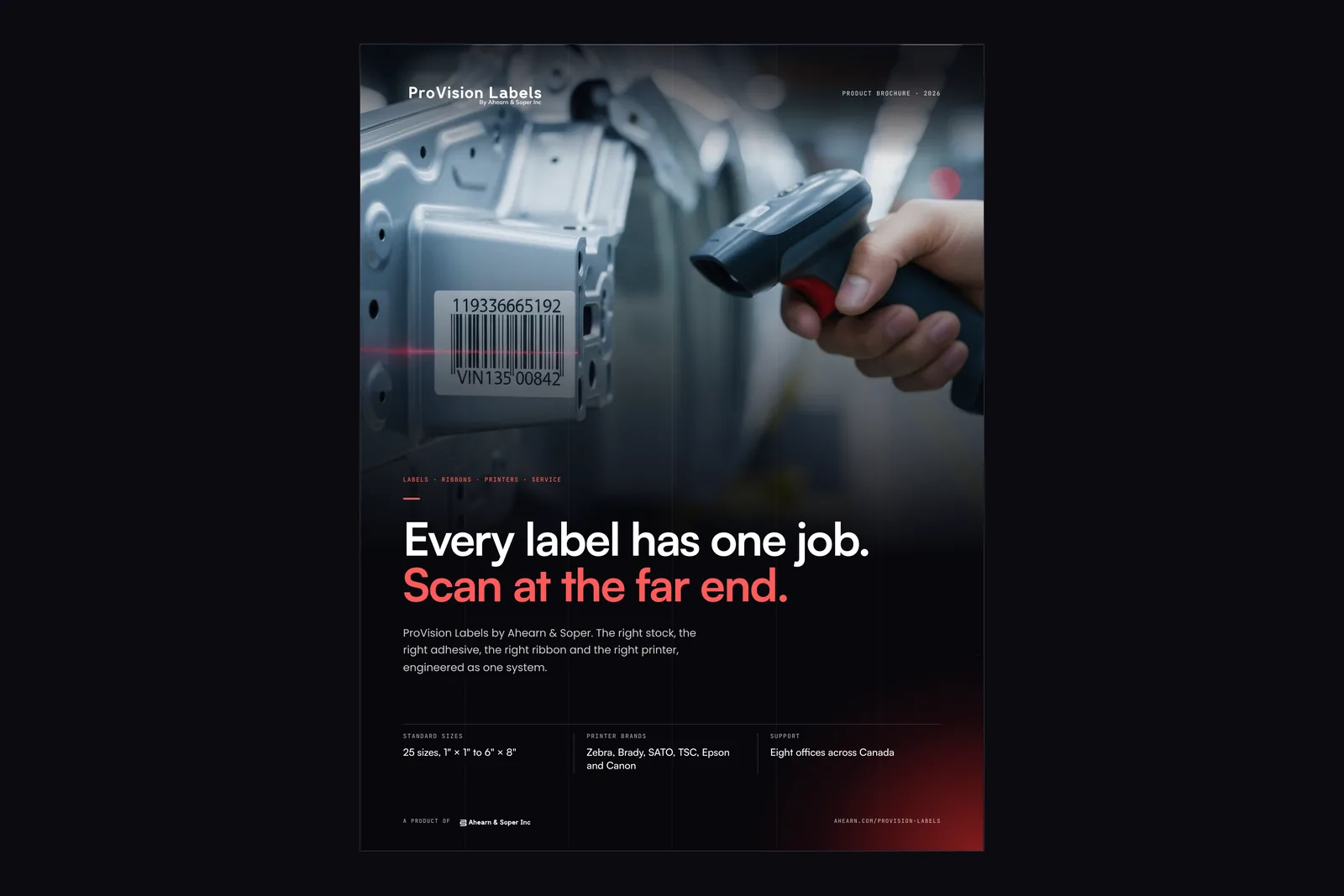
ProVision Labels brochure
The whole label system in 12 pages: five layers, 25 sizes, the printers we service and how to request a spec.
Get the brochureBefore you order
The questions buyers ask us first.
What is the difference between a desktop roll and an industrial roll?
The core and the outside diameter. Desktop rolls wind on a 1" core to a 5" diameter, to fit desktop printers. Industrial rolls wind on a 3" core to 7.5", so they hold more labels and need changing less often. For 4" x 6", that is 475 labels a desktop roll and 1,000 an industrial roll.
Thermal transfer or direct thermal?
Thermal transfer uses a ribbon and lasts longer, so it suits product, inventory and outdoor labels. Direct thermal needs no ribbon but darkens with heat and light, so it suits short life labels like shipping. If you are not sure which your printer does, check for a ribbon spindle, or send us the model.
Which ribbon do I need?
Wax for paper labels on cartons, wax/resin for coated paper and labels that get handled or damp, and resin for film labels outdoors or near chemicals. Our 110 mm ribbon fits labels up to 4" wide and comes in 300 m and 450 m lengths. Most desktop printers take coated side out; some need coated side in.
Can you match a label we already buy?
Usually. Send a sample, the part number or a photo of the roll's core label. We will identify the construction and quote a match, or tell you plainly if the current label is the reason things are failing.
What speeds up a quote?
Size, printer make and model, ribbon type if you know it, core size, the surface, the conditions the label has to survive and a rough monthly volume. If you only have half of that, send the half you have. The matcher above fills most of it in for you.
Can you print bilingual labels?
Yes. English and French layouts are standard work for us, including fitting bilingual copy onto a fixed label size. Bring your requirements to the first conversation, because they often decide the label size before anything else.
Labels quote
Send us the job. We will send the spec.
Send a spec from the matcher and your answers land here. A label specialist will come back with sizes, stock, a sample plan and pricing.
What happens next
- A label specialist reads it, not an autoresponder.
- We confirm the stock, price and lead time with our label shop, usually within one business day.
- If a sample helps, we send a roll to run on your printer before you buy a case.
- Phone800-263-4258
- Buy 4" x 6" onlinestore.ahearn.com (opens in a new tab)
Thanks, we have your request
A specialist will reply within one business day.
Something went wrong and your details were not sent. Please try again in a moment.