Comment le code à barres comble l'angle mort de votre ERP
Si votre ERP a été implanté il y a des années et que la visibilité des travaux en cours demeure floue, vous n'êtes pas seul. Voyez pourquoi cet écart existe, ce qu'il coûte aux opérations et comment le code à barres l'améliore sans remplacer votre système.
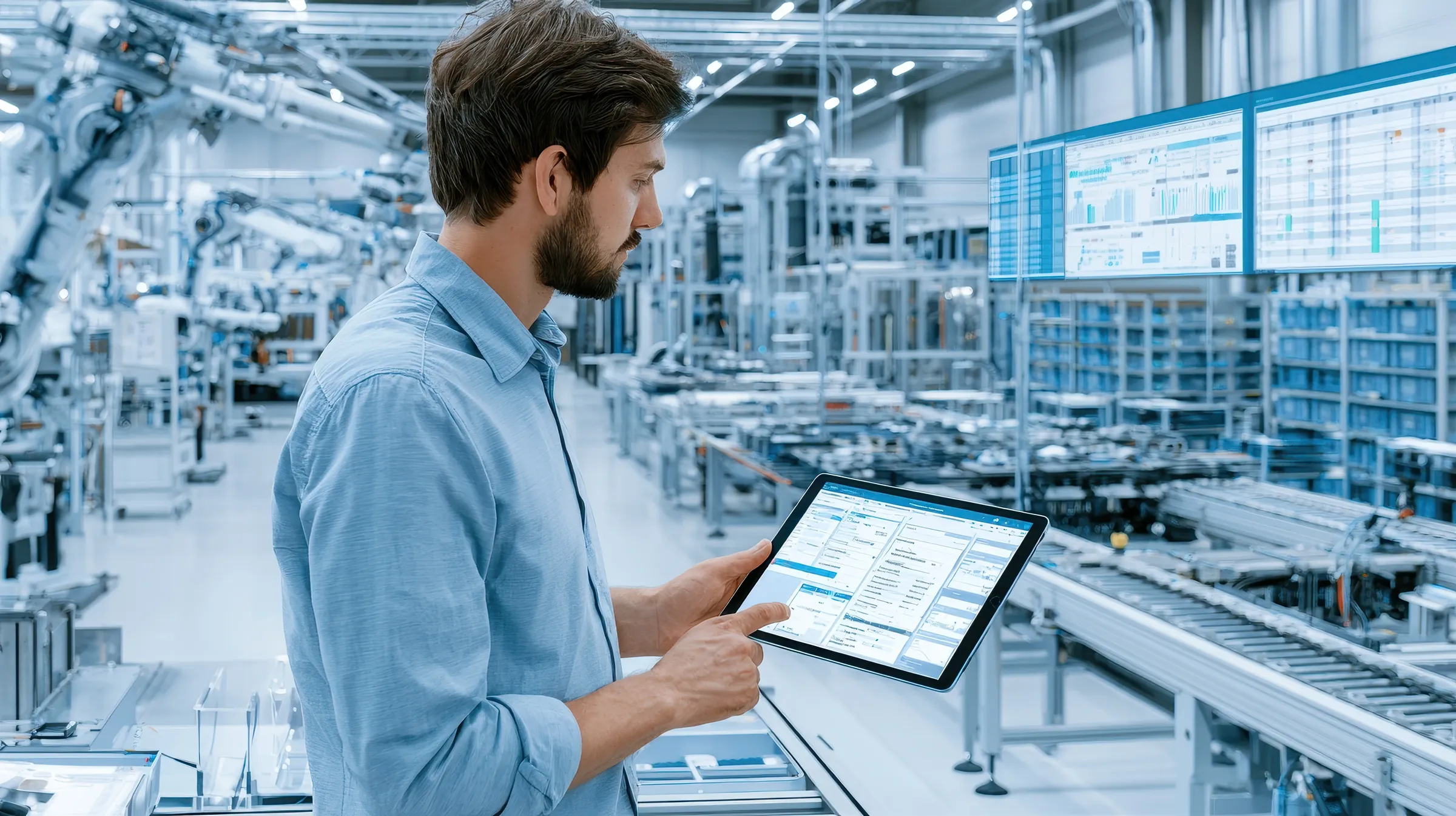
Demandez à un directeur d'usine où se trouve le lot de production numéro 4521 en ce moment, et vous obtiendrez généralement l'une de ces trois réponses : une estimation, un appel téléphonique sur le plancher, ou quelqu'un qui part marcher la ligne pour aller voir. Ce n'est pas un problème de personnel, c'est un problème de données. Et c'est bien plus courant que la plupart des responsables des opérations voudraient l'admettre.
Selon l'étude Manufacturing Vision Study 2024 de Zebra Technologies, seulement 16 % des dirigeants du secteur manufacturier dans le monde affirment disposer d'un suivi en temps réel des travaux en cours sur l'ensemble de leur processus de production. Les 84 % qui restent gèrent leur entreprise à partir d'un portrait du plancher de production qui est déjà périmé au moment où quelqu'un le consulte.
Si votre ERP a été implanté il y a des années et que la visibilité des travaux en cours demeure un mystère, vous n'êtes pas en retard, vous êtes la norme. Voici pourquoi cet écart existe, ce qu'il coûte, et comment les données de codes à barres le comblent sans remplacer le système.
Ce que veut dire le suivi des travaux en cours
Les travaux en cours, c'est tout ce qui se trouve entre la matière première et le produit fini : les pièces qui attendent à un poste de travail, le sous-assemblage en attente d'inspection, le lot qui a franchi 60 % de sa gamme d'opérations. Bien en faire le suivi, c'est pouvoir répondre, à tout moment, à ces questions : où se trouve un lot donné, à quelle étape il est rendu, combien de matière et de main-d'oeuvre il a consommées, et s'il respecte l'échéancier. Pas seulement où il se trouvait au dernier chargement de données de la veille.
Cette nuance compte davantage qu'il n'y paraît, parce que la plupart des ERP n'ont jamais été conçus pour répondre à la version « en ce moment » de cette question.
Pourquoi votre ERP n'a pas été conçu pour combler cet écart à lui seul
Les systèmes ERP sont, par conception, des systèmes de référence pour la planification et les finances. Ils excellent à centraliser les achats, l'établissement des coûts, l'ordonnancement et la production de rapports. Ce pour quoi ils ne sont généralement pas conçus, c'est la collecte continue, minute par minute, des données du plancher de production. Les mises à jour d'état arrivent habituellement sous forme de transactions : quelqu'un saisit une quantité, ferme un bon de travail ou lance un traitement par lots en fin de quart. Autrement dit, la vue qu'a l'ERP des travaux en cours n'est à jour que dans la mesure où la dernière personne l'a mise à jour.
Ce n'est pas un reproche adressé à une plateforme ERP en particulier. Le phénomène se présente presque partout, et il s'aggrave quand la collecte de données repose sur des fiches suiveuses papier, des tableaux blancs ou des tableurs qui sont réconciliés après coup plutôt que saisis au moment où le travail se fait. Un sondage du Manufacturing Leadership Council mené en 2024, cité par l'éditeur de logiciels industriels Harmoni, a révélé que 53 % des fabricants pointaient l'incohérence des données d'un système à l'autre comme l'un de leurs principaux défis opérationnels, même si 73 % exploitaient déjà un ERP et 82 % recueillaient déjà des données d'automates programmables ou de systèmes de contrôle réparti sur le plancher. Les systèmes existent. Ils ne se parlent tout simplement pas entre eux, ni avec le plancher, en temps réel.
Ce que coûte cet angle mort
Un écart de visibilité des travaux en cours se manifeste rarement par une seule défaillance spectaculaire. Il se manifeste par une centaine de petites qui s'additionnent :
- Dérive des stocks. Une quantité inversée ou une transaction saisie en retard crée des travaux en cours fantômes, c'est-à-dire des stocks que l'ERP croit exister (ou non) et qui ne correspondent pas au plancher.
- Chaos des accélérations. Quand personne ne peut confirmer l'état réel d'un lot, l'accélération « au cas où » devient la réponse par défaut à chaque appel d'un client.
- Dates promises non respectées. Des planificateurs qui ordonnancent à partir des données de la veille continueront de produire des calendriers qui ne correspondent pas à la réalité du jour.
- Risque de traçabilité. Si un problème de qualité apparaît en aval, retracer quels postes de travail, quels opérateurs et quels lots ont touché une unité donnée n'est possible que si ce mouvement a été saisi.
La cause profonde derrière la plupart de ces pertes est la même : la saisie manuelle des données, faite après coup. Les études sur la saisie manuelle situent systématiquement le taux d'erreur autour d'une faute par 300 frappes. Dans une usine qui traite des milliers de transactions par jour, entre les réceptions, les fins d'opération, les déplacements et les rebuts, ce taux d'erreur finit par produire des données de stocks et d'état auxquelles personne ne fait entièrement confiance. C'est exactement la situation qui garde les directeurs d'usine à marcher le plancher pour revérifier ce que le système prétend déjà savoir.
Comment les données de codes à barres comblent l'écart
La solution n'est pas un ERP plus gros, ce sont de meilleures données à l'endroit où le travail se fait réellement. Voilà ce que veut dire, concrètement, la saisie de données « au point d'activité » : au lieu d'inscrire une quantité sur une fiche suiveuse et de la saisir plus tard, un opérateur lit un code à barres au moment même où la matière est sortie, où une opération commence, où une unité se déplace ou où un lot est terminé. Cette lecture génère la transaction instantanément, à la source, sans étape de ressaisie entre les deux.
L'écart d'exactitude est bien documenté. Les activités qui reposent sur une saisie manuelle ou partiellement manuelle affichent généralement une exactitude des stocks de 63 à 85 %; celles qui sont dotées d'une lecture de codes à barres bien implantée atteignent couramment de 95 à 99,9 %. L'écart ne tient pas au soin que met votre équipe au travail, il tient au nombre d'occasions que le processus lui donne de commettre une erreur de saisie au départ.
Voici à quoi ressemble habituellement un flux de travaux en cours outillé par code à barres :
- Événement : sortie de matière. Ce qui est lu : lot ou plaque d'identification, puis bon de travail. Ce qui est mis à jour : la consommation de matière première.
- Événement : début d'opération. Ce qui est lu : badge de l'opérateur, poste de travail et bon de travail. Ce qui est mis à jour : la main-d'oeuvre et l'état de la gamme d'opérations.
- Événement : fin d'opération ou déplacement. Ce qui est lu : bon de travail, puis poste de travail suivant ou emplacement de préparation. Ce qui est mis à jour : l'emplacement et l'avancement des travaux en cours.
- Événement : rebut ou exception. Ce qui est lu : code de motif. Ce qui est mis à jour : les données de qualité et de rendement.
- Événement : produits finis. Ce qui est lu : unité ou palette, puis emplacement de rangement. Ce qui est mis à jour : les stocks et l'état de la commande.
Chacune de ces lectures est une transaction transmise à l'ERP ou au système de gestion d'entrepôt en temps réel, plutôt qu'une note qui attend que quelqu'un trouve le temps de la saisir.
Vous n'avez pas besoin de remplacer votre ERP pour obtenir cela
C'est la partie qui surprend bien des responsables des opérations : combler l'écart de visibilité n'exige pas d'arracher l'ERP ou le système hôte que vous avez déjà, y compris les plateformes plus anciennes qui n'ont pas été conçues en pensant à une intégration en temps réel avec le plancher de production. Ce que cela exige, c'est une couche de saisie de données : des appareils portatifs robustes ou des ordinateurs montés sur véhicule, des étiquettes à code à barres durables conçues pour les conditions du plancher, et un chemin d'intégration vers votre système actuel. Cette couche se place entre le plancher et l'ERP, et elle lui transmet des transactions exactes et à jour au lieu d'attendre des mises à jour manuelles.
Les déploiements les plus efficaces ne cherchent pas à outiller l'usine entière dès le premier jour. Ils commencent aux passages de relais les plus problématiques, là où la phrase « on ne sait pas vraiment où ce lot est rendu » revient le plus souvent, valident le flux de travail à cet endroit, puis étendent la démarche à partir de cette base.
Par où commencer
Avant d'évaluer quelque matériel ou logiciel que ce soit, il vaut la peine de cartographier honnêtement votre processus actuel de travaux en cours :
- Où les mises à jour d'état sont-elles saisies aujourd'hui, et combien de temps s'écoule entre l'événement et la saisie?
- Quels passages de relais, entre la réception, les transferts de poste de travail et les produits finis, génèrent le plus de questions du type « où est-ce rendu? »
- Lesquels de ces passages de relais comportent déjà une étiquette, une fiche suiveuse ou un identifiant qui pourrait porter un code à barres?
Ces réponses indiquent habituellement tout de suite par où un projet pilote devrait commencer.
À retenir
La visibilité des travaux en cours en temps réel n'est pas une mise à niveau de licence ni un remplacement de système, c'est une question de comment et de quand les données entrent dans votre ERP au départ. La saisie par code à barres est la couche qui transforme le « on le saura au changement de quart » en « on le sait déjà », avec le système que vous avez déjà.
Si vous voulez un second regard sur les endroits où votre propre processus de travaux en cours perd de la visibilité, Ahearn & Soper raccorde depuis des décennies la saisie de données par code à barres et par appareil mobile à des systèmes ERP, à des systèmes de gestion d'entrepôt et à des systèmes hôtes existants, pour des fabricants et des distributeurs, y compris le genre de plateformes anciennes auxquelles la plupart des fournisseurs ne veulent pas toucher.
Sources
- Zebra Technologies, « Zebra Study: Only 16% of Manufacturers Have Real-Time Visibility into Manufacturing Production », Manufacturing Vision Study 2024, juin 2024.
- Panorama Consulting Group, « Why Digital Transformation Hasn't Solved Production Visibility In Manufacturing », 2025.
- Harmoni, « What Is Manufacturing Visibility? », citant le sondage 2024 du Manufacturing Leadership Council, 2026.
- Advanced Automation, « 10 Causes of Warehouse Barcode Data Errors and What They're Actually Costing Your Operation », 2026.
Articles à lire ensuite
Trois autres lectures sur la précision, l'étiquetage, la traçabilité et les systèmes qui les soutiennent.

Envie de parler de vos opérations?
Dites-nous ce que votre entrepôt doit accomplir, et nous vous dirons franchement si nous pouvons vous aider.