GS1 and Barcode Standards for Regulated Industries: A Plain-English Guide
Understand how GS1 connects GTIN, GLN, SSCC, Data Matrix, UDI, DSCSA, and FSMA 204 across regulated industries.
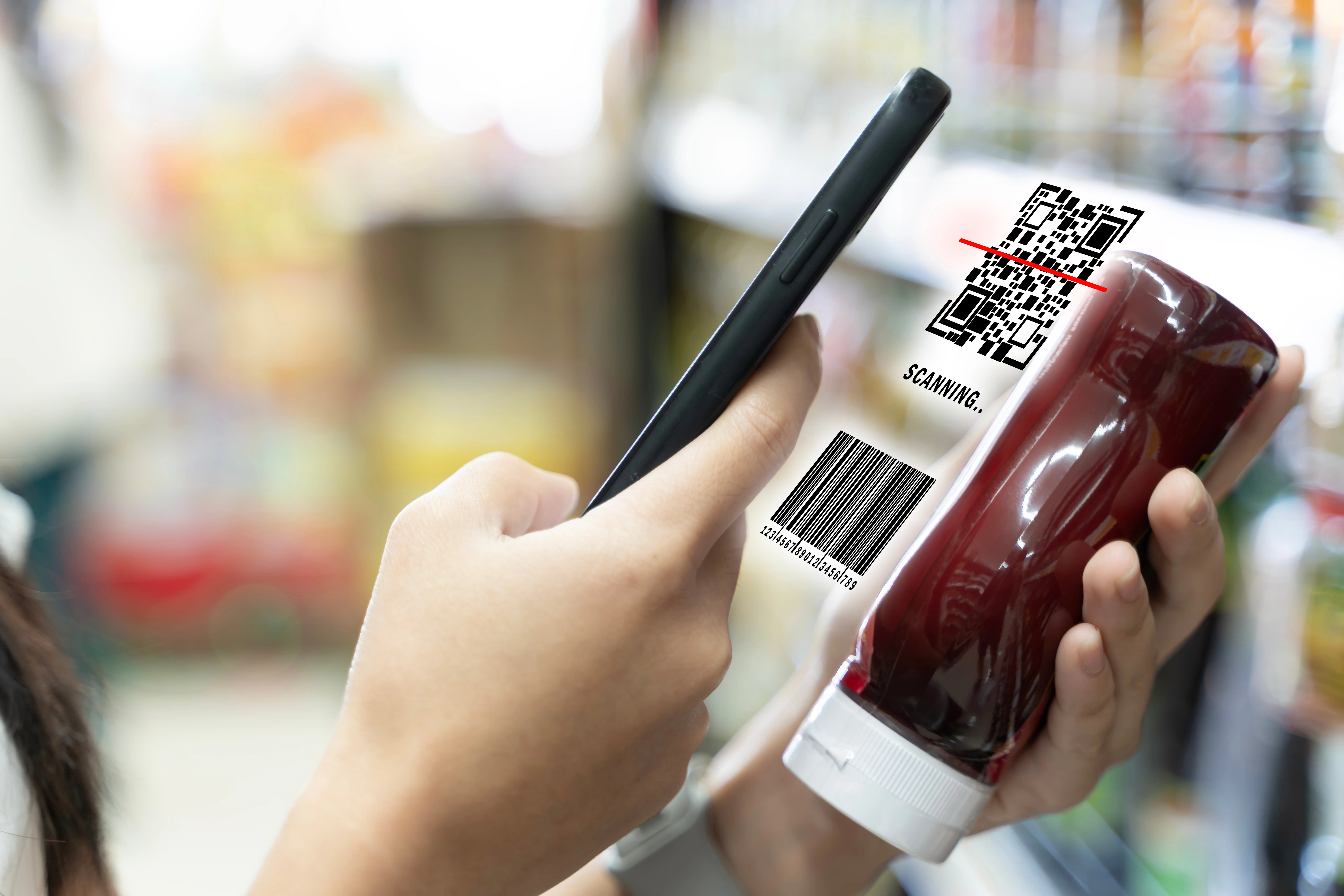
Walk into a conversation about regulated labeling and the acronyms arrive fast: GTIN, GLN, SSCC, Data Matrix, UDI, DSCSA, FSMA204. They're not competing systems, they're mostly the same underlying identification framework, GS1, applied to different regulatory requirements across pharma, medical devices, food, and healthcare. Understanding how the pieces connect makes every one of those individual compliance requirements easier to reason about.
The core GS1 identifiers, explained without jargon
GTIN (Global Trade Item Number) identifies what a product is, the manufacturer, the product, and the unit of measure. It's the identifier printed on a product barcode and is the foundation nearly every other GS1 application builds on.
GLN (Global Location Number) identifies where, a specific location or legal entity, such as a hospital pharmacy, a distribution center, or a manufacturing site. GLNs let trading partners refer to the same physical or organizational location the same way, which matters enormously when regulators or trading partners need to know exactly where a product has been.
SSCC (Serial Shipping Container Code) identifies a specific logistics unit, a pallet, case, or parcel for shipment-level tracking as it moves through a supply chain.
Batch/lot number, serial number, and expiration date are the variable data elements that, combined with a GTIN, provide the traceability layer regulators actually care about: not just what the product is, but which specific unit, from which production run, expiring when.
GS1 DataMatrix is the 2D barcode symbology that carries all of the above in a single, compact, scannable code, increasingly the universal standard across healthcare and pharma because it holds more data in less space than a traditional linear barcode and can be read reliably even on small or curved surfaces like unit-dose vials.
How these identifiers map to the regulations you have to satisfy
This is the part that turns acronym soup into acoherent system:
- Regulation: FDA UDI Rule (devices) What it requires: Unique identification of the device, lot/serial, and expiration, in both human and machine-readable form GS1 elements it relies on: GTIN (as the Device Identifier), lot/serial/expiration (Production Identifier), GS1 DataMatrix
- Regulation: DSCSA (pharma) What it requires: Unit-level serialization and interoperable electronic traceability across trading partners GS1 elements it relies on: GTIN, lot, expiration, unique serial number, GS1 DataMatrix
- Regulation: FSMA Section 204 (food) What it requires: Key Data Elements captured at Critical Tracking Events, producible within 24 hours GS1 elements it relies on: GTIN, GLN, traceability lot codes, GS1-128 case labels, SSCC-18 pallet labels
- Regulation: Hospital point-of-care scanning What it requires: Matching the right product to the right patient at the point of use GS1 elements it relies on: GTIN (product), GLN (location), patient wristband barcode
Once you see the pattern, it's clear these aren't four separate compliance projects — they're one identification infrastructure, applied to four different regulatory contexts. An organization that builds GS1 competency once can apply it across every one of these requirements, rather than solving each in isolation.
Where GS1 adoption creates value beyond compliance
Point-of-care scanning research and hospital case studies consistently point to the same benefit categories once GS1 identifiers are properly implemented: fewer medication and specimen-matching errors, faster and more precise product recalls (because affected lots can be identified and pulled immediately rather than by broad batch), and smoother trading-partner data exchange because everyone is referring to the same product and location using the same identifiers.
The catch — and it's the catch this entire content series is about, is that none of this works if the physical barcode isn't reliably scannable. A perfectly structured GS1 DataMatrix encoding the correct GTIN, lot, and expiration is functionally useless if it prints at low contrast, degrades under cold-chain condensation, or is too small for the scanning equipment deployed at the point of use. GS1 standards define what the data should say; label material, print quality, and barcode verification determine whether that data can be read when it matters.
A practical starting point
- Inventory which GS1 identifiers your organization already uses (GTIN, GLN, SSCC) and where the gaps are relative to UDI, DSCSA, OR FSMA 204 requirements that apply to you.
- Confirm your barcode symbology matches current guidance, GS1 DataMatrix is increasingly the expected standard in healthcare and pharma, not the older linear formats.
- Verify barcode print quality against ISO/IEC 15416 grading, not just visual inspection, especially for small-format labels like unit-dose vials or specimen tubes.
- Treat GS1 competency as a shared infrastructure investment across compliance functions, rather than solving UDI, DSCSA, and FSMA 204 labeling seperately with different tools and vendors.
FAQ
What's the difference between a GTIN and a UDI?
A GTIN is a GS1 identifier for a product. A UDI (Unique Device Identifier) is an FDA regulatory requirement for medical devices that is commonly built using a GTIN as its Device Identifier component, combined with a variable Production Identifier (lot, serial, expiration).
Why is GS1 DataMatrix replacing linear barcodes in healthcare?
It holds significantly more data (GTIN, batch, expiry, serial number) in a smaller footprint, and it can be reliably scanned on small or curved surfaces like unit-dose medication packaging, something linear barcodes struggle with at that scale.
Do I need different barcode systems for UDI, DSCSA, and FSMA 204?
No, all three build on the same GS1 identification framework (GTIN, GLN, lot/serial/expiration data). The regulatory requirements differ, but the underlying data structure and barcode technology can be shared across compliance programs.
Ahearn& Soper helps pharma, food, and healthcare organizations implement GS1-compliant barcode printing and verification systems that hold up under real operating conditions. Explore our barcode verification systems or request more information.
Articles à lire ensuite
Trois autres lectures sur la précision, l'étiquetage, la traçabilité et les systèmes qui les soutiennent.

Envie de parler de vos opérations?
Dites-nous ce que votre entrepôt doit accomplir, et nous vous dirons franchement si nous pouvons vous aider.