






Epson ColorWorks for coffee roasters
Colours of the World of Coffee
Six origins. Six stories. One printer that brings every one of them to life on the bag.
Colours of the World of CoffeePetit Feu
The story
Every coffee begins somewhere
On a hillside in Colombia, in the volcanic soil of Indonesia, in Ethiopia, where coffee began. Those places are full of colour. Your label should be too.
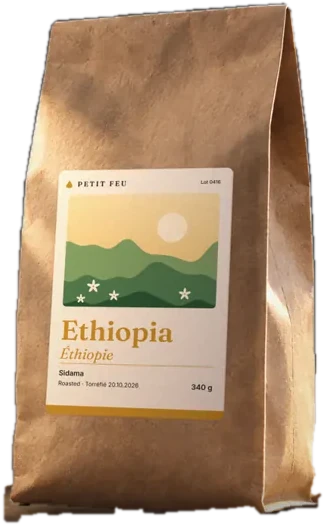
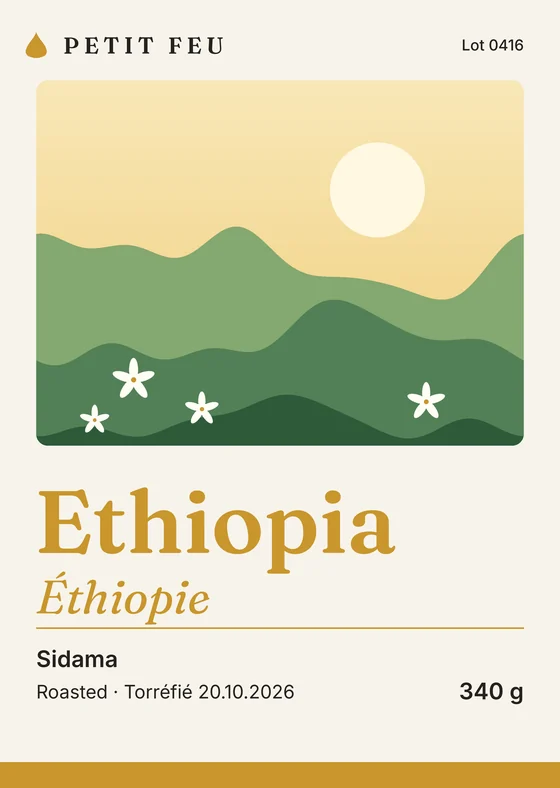
Sidama
Ethiopia
Where coffee began.
Gold light over green highlands, with white coffee blossom in the foreground. The palette comes from the hills of Sidama.
From the region
Smallholders in Sidama, southern Ethiopia, grow heirloom Ethiopian coffee varieties, with many farms at 1,800 m and above. Both washed and natural lots are produced, and naturals are commonly described as fruity, with berry notes.
How ColorWorks printed it
Small white blossoms have to stay clean against deep green and gold hills. The CW-C4000 prints at up to 1,200 dpi with variable droplet size, and adds each batch’s lot code and roast date on demand.
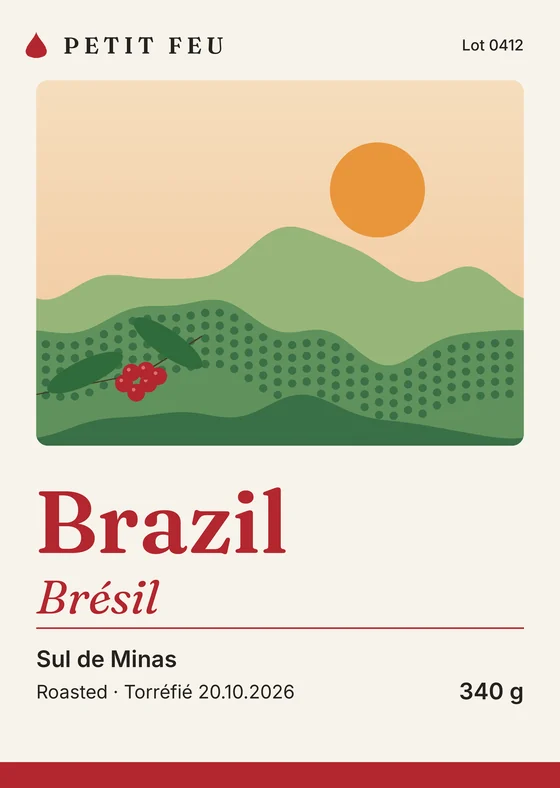
Sul de Minas
Brazil
The warm heart of coffee.
An orange sun over rolling green farms, with ripe red cherries in front. Warm tones for the warm heart of coffee.
From the region
Sul de Minas, in southern Minas Gerais, grows arabica at 900 to 1,300 m. Natural and pulped natural processing are widely used, and the cup is commonly described as sweet and smooth.
How ColorWorks printed it
An orange sun and small red coffee cherries sit against green hills, so strong warm colours meet fine detail. The CW-C4000 prints them in four pigment inks with variable droplet size, at up to 1,200 dpi.
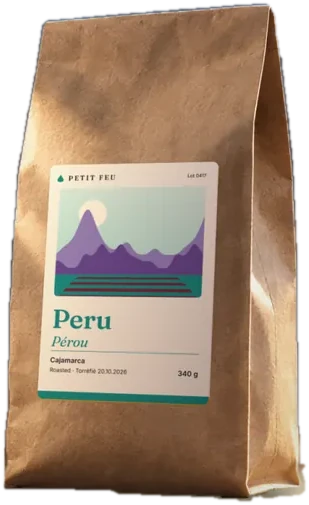
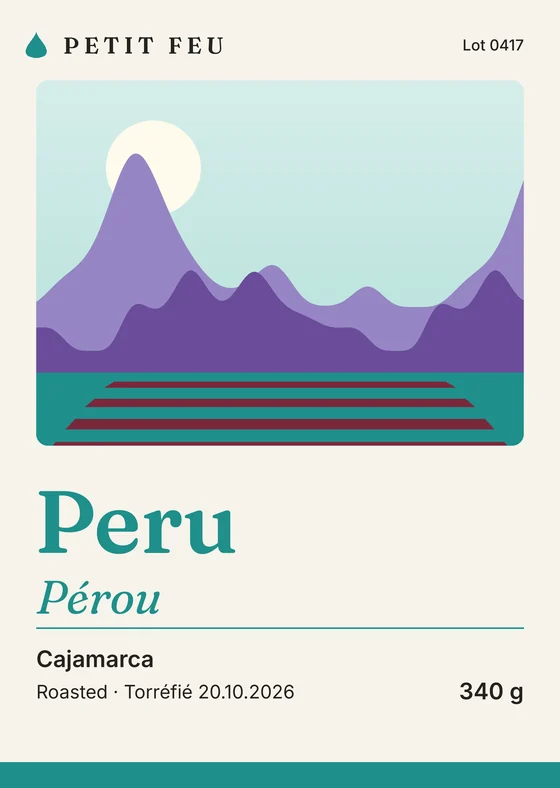
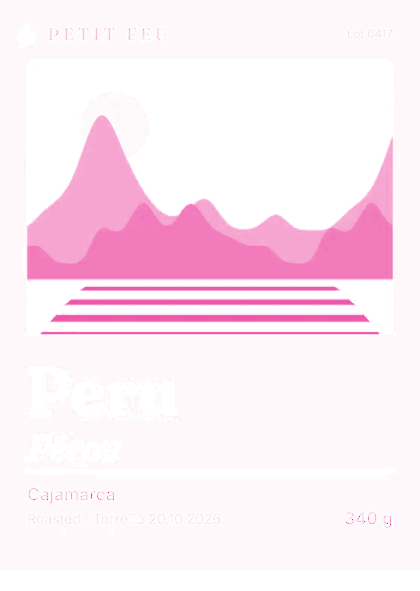
Cajamarca
Peru
Andean threads.
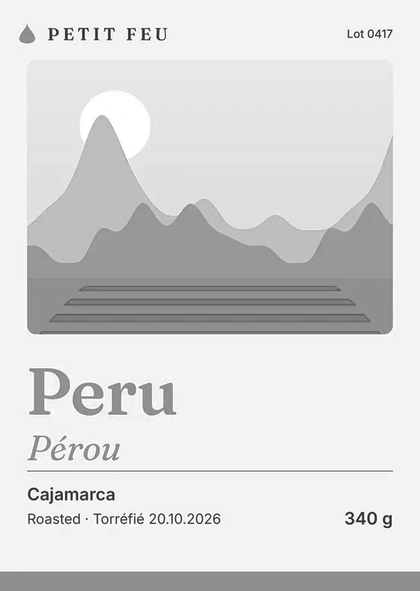
Violet Andean peaks under a teal sky, above a woven stripe band that nods to Andean textiles.
From the region
Cajamarca, in northern Peru by the border with Ecuador, is smallholder country, with coffee grown at 1,500 to 2,600 m. Most lots are washed, and cups are commonly described as sweet, with fruit notes.
How ColorWorks printed it
The woven stripe band is built from fine lines, and the violet and teal are mixed from four inks. The CW-C4000 prints at up to 1,200 dpi with variable droplet size, using pigment inks.
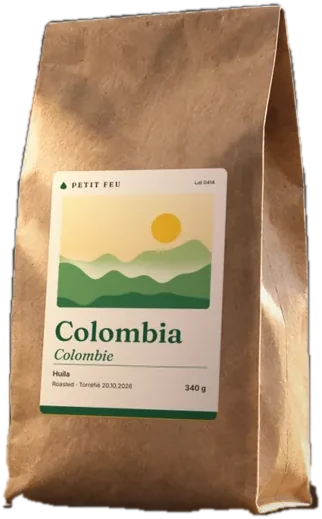
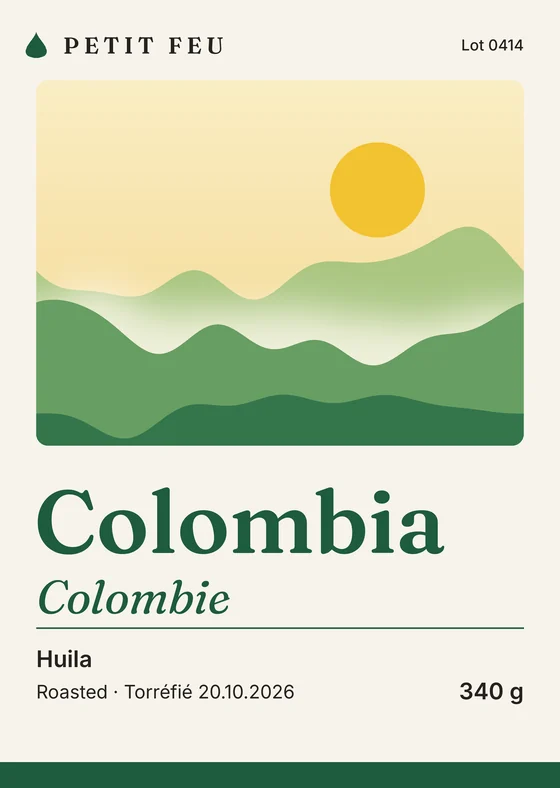
Huila
Colombia
Mountains in every cup.
Green mountains in morning mist under a yellow sun. Layer after layer of hills, for a country of mountain farms.
From the region
Huila, in southwestern Colombia, grows coffee at 1,000 to 2,200 m, and its protected designation of origin covers washed arabica. Cups are commonly described as sweet, with fruity, caramel aromas.
How ColorWorks printed it
Morning mist means pale, soft tones over green hills, where uneven shading shows easily. The CW-C4000 uses variable droplet size at up to 1,200 dpi, and prints the lot code and roast date for each batch on demand.
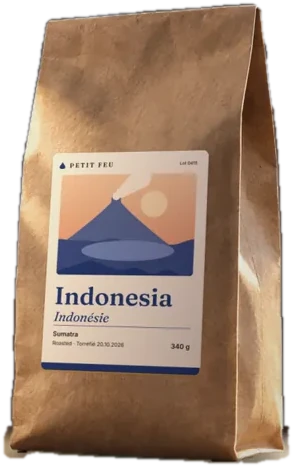
Sumatra
Indonesia
Earth, fire and still water.
An indigo volcano over a still lake under a peach sky. Earth, fire and still water, in three colours.
From the region
Sumatra is known for wet hulling, locally called giling basah, where coffee is hulled while still moist and then dried. Cups are commonly described as earthy and herbal, with a heavy body.
How ColorWorks printed it
An indigo volcano rises over a lake under a peach sky, so dense dark tones and light ones share the label. The CW-C4000 prints both in four pigment inks, at up to 1,200 dpi.

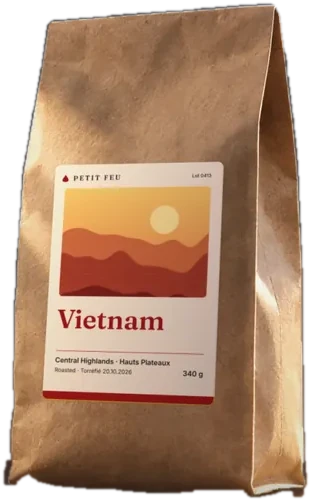
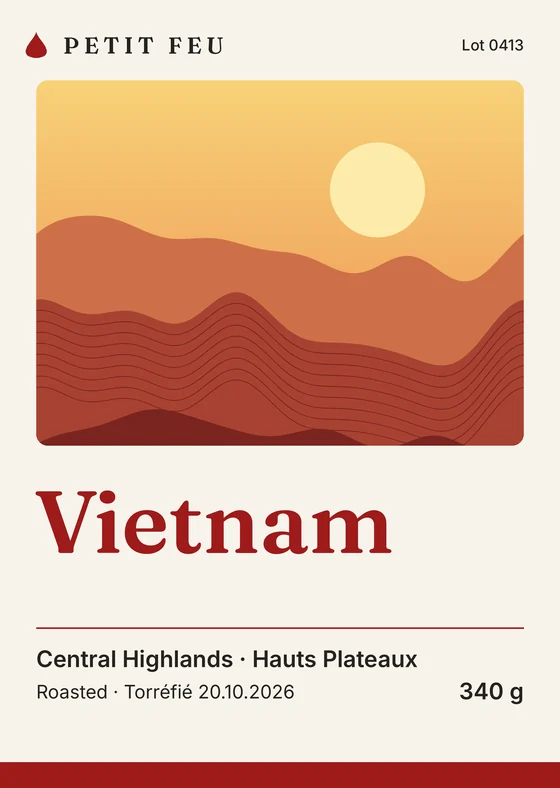
Central Highlands
Vietnam
Bold, sweet, unforgettable.
Layered red hills under a gold sky. Bold colour for a bold, sweet cup.
From the region
Nearly all of Vietnam’s coffee is robusta, a different species from arabica, and most of it grows in the Central Highlands. Specialty robusta lots from the region are commonly described with chocolate and nut notes.
How ColorWorks printed it
Layered red hills need close shades of red to stay distinct, and the lot code and roast date are set in small type. The CW-C4000 prints both at up to 1,200 dpi, on demand, with no preprinted stock.
Why print it yourself
Your labels, on your schedule
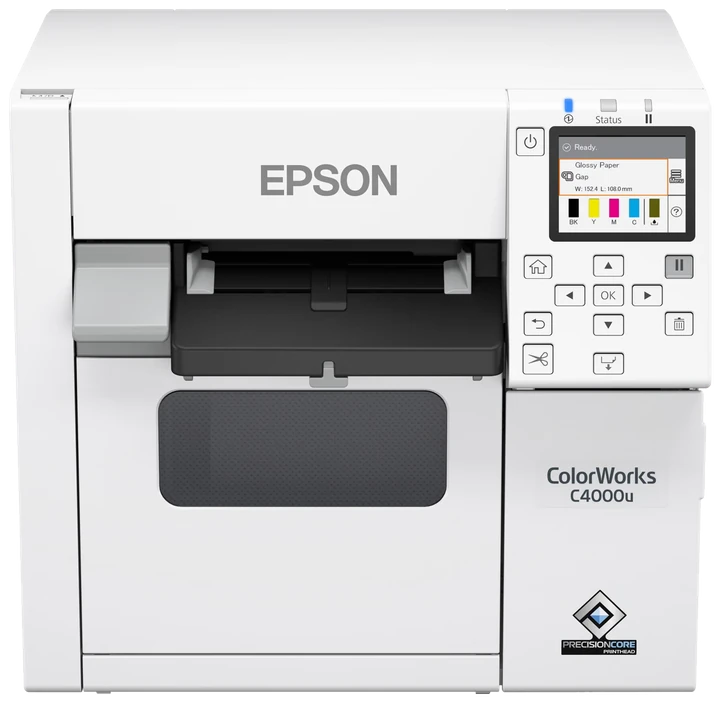
Four pigment inks, cyan, magenta, yellow and black, build every colour on the label.
Print what you need, when you need it
New lot on Monday? Label on Monday. ColorWorks prints full-colour labels on demand, one label or a full roll.
Tell the whole story
Origin, tasting notes and brew guides, all in colour. The CW-C4000 and CW-C6500A print up to 1,200 × 1,200 dpi, sharp enough for fine type.
No minimums, less waste
Change a design without scrapping a roll. You print on blank label stock, with no plates and no print run to set up.
Stand out on the shelf
Colour helps your bags get noticed. All three models use pigment-based Epson UltraChrome DL ink.
Print on demand
Change the origin, change the label
Each new lot gets its own design, printed in full colour on blank label stock when the bag needs it. No plates, no pre-printed rolls.
Origin
- Ethiopia
Label
1 of 6
Printer
- CW-C4000
Feed speed
Up to 100 mm (3.94 in) per second
Sample labels for Petit Feu
See it print
From design to bag
Watch six origin labels come to life, from the screen to the shelf.
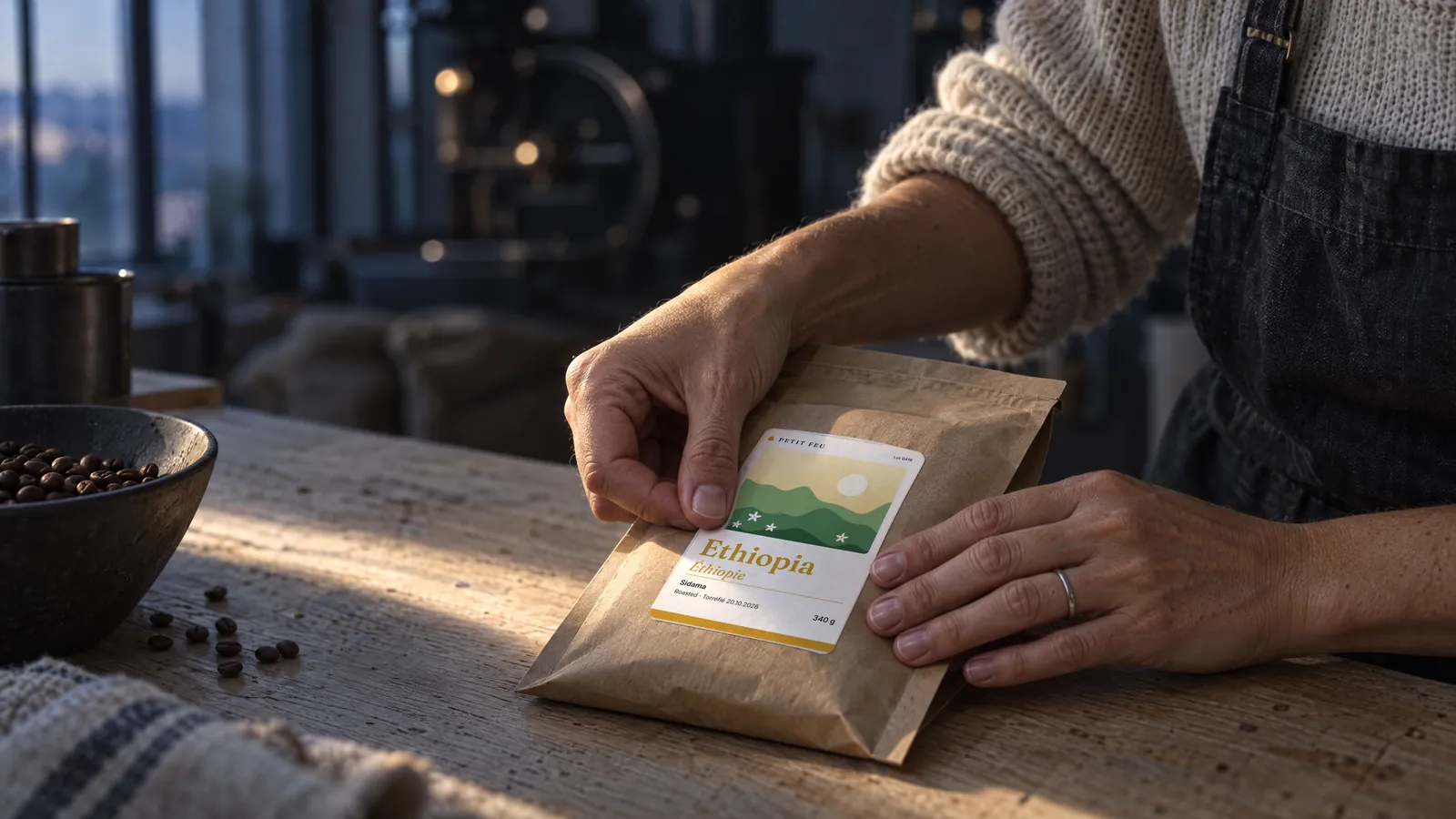
The film plays from YouTube.
Epson ColorWorks
Which ColorWorks fits your roastery?
Three printers, one family. All three print full-colour labels on demand with pigment ink.
Model finder
Which one is right for you?
Answer three questions and we will suggest a model.
0 of 3 answered
How many bags do you label each week?
How wide is your widest label?
How many origins and blends do you label?
Our suggestion
Answer the questions to see a suggestion
A guide only. We confirm the right fit with you in the demo.
Epson ColorWorks CW-C4000
Compact, for small-batch roasters and roaster-cafés printing labels in house for the first time.
Print width
Up to 108 mm (4.25 in)
Resolution
Up to 1,200 × 1,200 dpi
Ink
UltraChrome DL pigment, CMYK
A compact printer sized for small-batch roasting, with up to 1,200 × 1,200 dpi for fine detail.
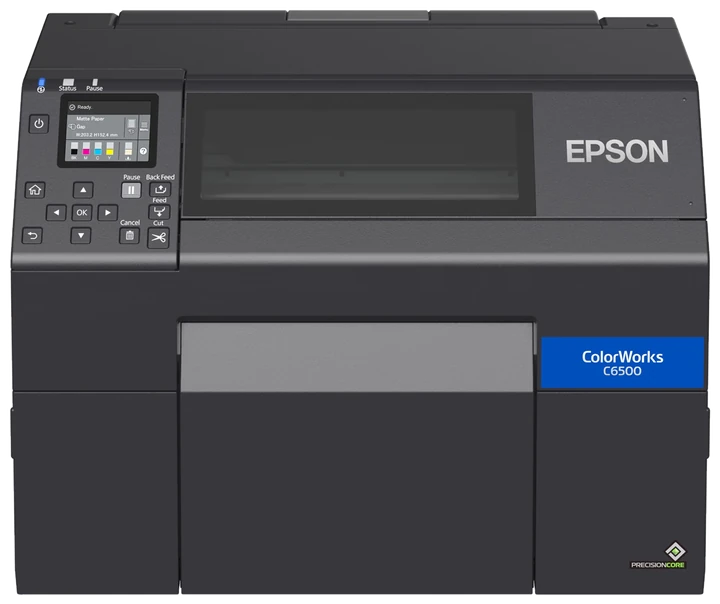
Epson ColorWorks CW-C6500A
Wide labels for larger bags and wholesale lines, with an auto cutter.
Print width
Up to 212 mm (8.34 in)
Resolution
Up to 1,200 × 1,200 dpi
Finishing
Auto cutter
Your labels are wider than 4.25 in (108 mm). The CW-C6500A prints up to 8.34 in (212 mm) wide.
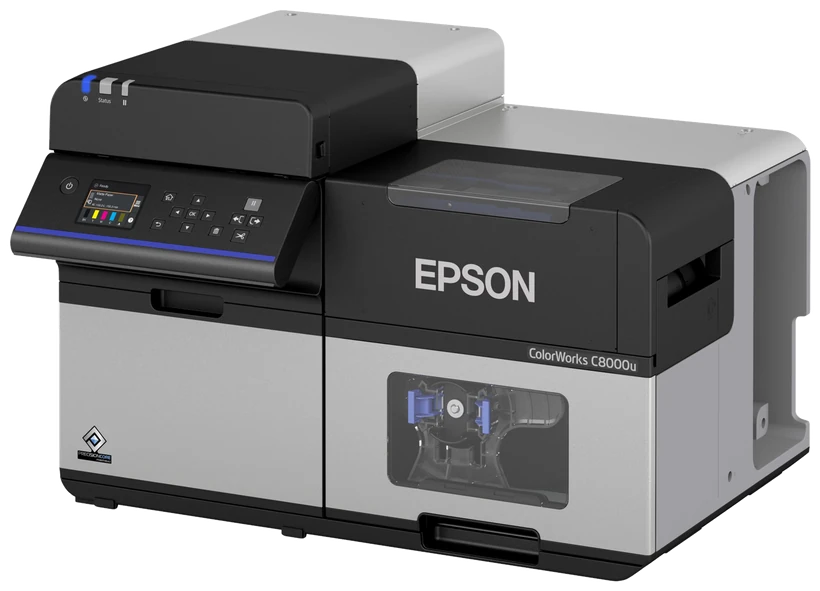
Epson ColorWorks CW-C8000
For high-volume roasters and lines with many origins and blends.
Print width
Up to 108 mm (4.25 in)
Print speed
Up to 300 mm (11.8 in) per second
Ink
1.9 L total ink capacity
At your volume, speed and capacity matter. The CW-C8000 prints up to 11.8 in (300 mm) per second and holds 1.9 L of ink.
What is the best label printer for a coffee roaster?
It depends on your bag volume and label size. The Epson ColorWorks CW-C4000 suits small-batch roasters, the CW-C6500A prints wide labels up to 8.34 in (212 mm), and the CW-C8000 prints up to 11.8 in (300 mm) per second for high-volume lines.
Can I print coffee bag labels in house?
Yes. A colour label printer such as Epson ColorWorks prints full-colour labels on demand on blank label stock, so you print what you need when you roast.
What label widths can ColorWorks print?
The CW-C4000 and CW-C8000 print up to 4.25 in (108 mm) wide. The CW-C6500A prints up to 8.34 in (212 mm) wide.
How sharp is the print?
The CW-C4000 and CW-C6500A print up to 1,200 × 1,200 dpi. The CW-C8000 prints at 600 × 1,200 dpi.
What ink do the printers use?
All three use pigment-based Epson UltraChrome DL ink.
Do I need a minimum order?
No. With an in-house printer you buy blank label stock and print as many or as few labels as you need.
Where can I see a ColorWorks printer in Canada?
Book a demo with Ahearn & Soper, an Epson Platinum partner, or shop the range on store.ahearn.com.
Is Petit Feu a real roastery?
No. Petit Feu is a fictional roastery we created for this campaign. Its six labels show what a roaster can print in house. The film and roastery images were created with the help of AI.
Your coffee has a story. Give it colour.
See ColorWorks print your labels. Book a demo with Ahearn & Soper, an Epson Platinum partner.
Book a demo
See your own labels print
Tell us what you label and how many. A label specialist will come back to you with the right ColorWorks model, the label stock and a price.
Thanks, we have your request
A specialist will reply within one business day.
Something went wrong and your details were not sent. Please try again in a moment.
Petit Feu is a fictional roastery created for this campaign. The film and roastery images were created with the help of AI.