The autonomous warehouse: when AI orchestrates humans, robots, and systems in real time
AI orchestration assigns tasks, reroutes equipment and balances workloads across associates and robots in real time. It is only as good as the data capture and labelling feeding it.
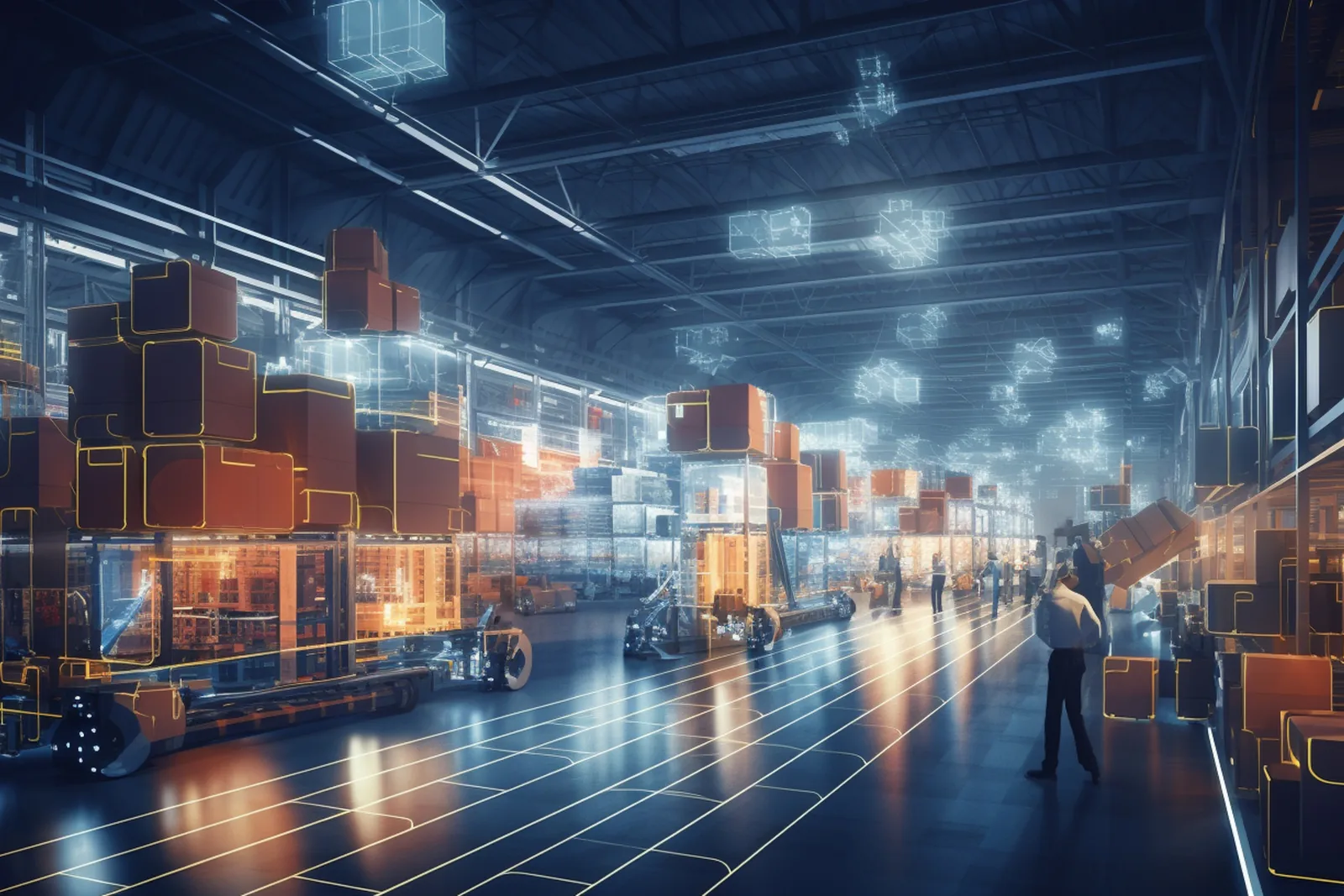
The warehouse of tomorrow is not a place of static shelves and manual clipboards. It is a living, breathing operational ecosystem, one where artificial intelligence continuously watches, learns, and acts, balancing an intricate choreography of autonomous mobile robots (AMRs), human associates, conveyor systems, and enterprise software platforms. Welcome to the autonomous warehouse, where real-time AI orchestration is not a futuristic concept, it is the competitive edge that leading operations are deploying today.
At Ahearn & Soper Inc., we work with distribution centres and fulfillment operations across North America to implement the labelling, data capture, and systems integration technologies that make this vision real. In this article, we explore how AI-powered warehouse management systems (WMS) are transforming operations, and what it means for the humans and machines working side by side.
What does it mean for AI to 'orchestrate' a warehouse?
Traditional warehouse management systems were built around rules. Pick this first. Stage that pallet there. Follow this sequence. They were designed for predictability, and warehouses rarely stay predictable for long.
AI orchestration is fundamentally different. Rather than executing a fixed playbook, an AI-driven WMS continuously ingests real-time data from every corner of the operation, from RFID readers and barcode scanners at receiving docks, to AMR telemetry, to order management system feeds, to labour tracking dashboards. It then makes dynamic decisions: who does what, with which equipment, in what order, right now.
The AI doesn't just manage the warehouse. It perceives it constantly, simultaneously, and without fatigue, and responds to changes in milliseconds rather than minutes.
This distinction matters enormously. In a conventional operation, a floor supervisor might notice a bottleneck at the pack station twenty minutes after it forms. An AI orchestration layer detects it as it begins to develop and reroutes labour and robot traffic before the queue ever backs up.
The four pillars of real-time AI orchestration
1. Dynamic task assignment
One of the most powerful capabilities of modern AI-driven WMS platforms is the ability to assign tasks, to both humans and robots, based on a continuously updated model of operational state.
Instead of a static pick list handed to an associate at the start of a shift, AI systems generate task streams that adapt in real-time. If a high-priority order drops in from an enterprise customer at 2:00 PM, the AI immediately recalculates task priorities across the floor, reassigning picks, pulls, and staging activities accordingly, without human intervention.
For human associates, this typically surfaces through wearable devices, mobile terminals, or voice-directed systems. For AMRs and autonomous forklifts, it arrives as updated routing instructions dispatched over fleet management APIs. The result is a workforce, human and robotic that is always working on the right task at the right time.
Real-World Impact: Operations that have implemented AI-driven task interleaving, where associates complete multiple task types in a single travel path rather than returning to a home base between each, report meaningful gains in individual productivity without increasing headcount or capital expenditure.
2. Intelligent equipment rerouting
In a hybrid human-robot warehouse, traffic management is a constant challenge. AMRs, powered industrial trucks, and walking associates share aisles, intersections, and dock areas that were often originally designed with only human movement in mind.
AI orchestration systems maintain a live spatial model of the facility, essentially a digital twin that tracks the real-time position and status of every mobile asset. When a forklift is staging a pallet in Aisle 7, the AI automatically reroutes AMR traffic through adjacent paths. When a pick associate enters a zone for a manual verification task, robot traffic is temporarily suspended or redirected.
This is not simple collision avoidance, it is proactive traffic orchestration, designed to maximize throughput across the entire facility simultaneously rather than solving one local conflict at a time.
Advanced platforms are now integrating predictive rerouting, where the AI anticipates congestion based on scheduled inbound receipts, known shift change patterns, and historical flow data adjusting robot missions proactively before bottlenecks materialize.
3. Workload balancing across hybrid teams
One of the subtler but most impactful capabilities of AI orchestration is real-time labour balancing, ensuring that workload is distributed equitably and efficiently across both human and robotic resources throughout a shift.
Traditional WMS platforms could assign tasks, but they struggled to dynamically rebalance as conditions changed. If three associates called in sick, supervisors scrambled manually to redistribute their workload. If an AMR fleet fell behind due to a battery swap cycle, pick rates sagged until someone intervened.
Modern AI systems monitor labour capacity continuously. They track the pace of each associate, not to penalize slower workers, but to feed those workers tasks that match their current output rate while directing faster workers toward time-critical picks. If robot availability drops unexpectedly, the system automatically increases task flow to available human associates and flags the situation for supervisor attention.
The goal of workload balancing is not to push every worker to maximum throughput. It is to keep the overall system flowing: smoothly, sustainably, and without the peaks and valleys that drive overtime costs and shipping delays.
4. Seamless human-robot handoffs
Perhaps the most technically sophisticated dimension of AI orchestration is the management of handoff points, the moments where a task transitions from a robot to a human, or vice versa.
Consider the goods-to-person picking model. An AMR retrieves a storage pod and delivers it to a human pick station. The AI must coordinate the AMR's arrival time, the human associate's readiness, the order being fulfilled, and the next destination for the pod, all in real-time. If the associate at that station is still processing the previous pod, the AI holds the next AMR in a buffer zone rather than creating a queue that blocks other traffic.
These micro-decisions, happening hundreds or thousands of times per hour across a busy fulfillment centre, are where AI orchestration delivers its most tangible value. The reduction in idle time, waiting time, and unproductive travel is where the throughput gains are found.
The role of data capture and labelling infrastructure
AI orchestration systems are only as good as the data feeding them. Real-time decision-making requires real-time visibility, and that visibility depends on a robust data capture and labelling infrastructure that most operations are still actively building out.
At Ahearn & Soper, we see this gap regularly. Operations that have invested in AI-capable WMS platforms often find their ambitions constrained by label quality issues, barcode scan failure rates, or gaps in RFID coverage that create blind spots in the system's operational model.
The foundational requirements for effective AI orchestration include:
- High-quality, consistently applied barcode and RFID labels at every unit, case, pallet, and location in the facility
- Barcode scanners, mobile computers, and RFID readers positioned and configured for maximum first-scan success rates
- Label printing solutions capable of producing compliant, durable labels at the throughput speeds required by automated receiving and put-away workflows
- Verified data integrity from inbound receipt through outbound shipment, with no gaps that could cause the AI to operate on stale or incomplete location data
When these elements are in place, the AI orchestration layer has the real-time, high-fidelity data it needs to make reliable decisions. When they are not, the system compensates with conservative assumptions, and conservative assumptions mean slower throughput.
Human associates in the autonomous warehouse: partners, not replacements
A common concern among operations leaders and front-line associates alike is that increased automation and AI orchestration means fewer jobs. The experience of leading operations tells a more nuanced story.
In most hybrid warehouse environments, AI orchestration changes the nature of human work rather than eliminating it. Associates are relieved of the most repetitive, physically demanding, and cognitively routine tasks, and increasingly focused on activities that require judgment, dexterity, problem-solving, and relationship management: exception handling, quality verification, vendor communication, equipment oversight, and complex order management.
The operations that successfully navigate this transition invest in associate training alongside technology deployment. Workers who understand how the AI system makes decisions, and who can interpret the guidance delivered through their wearables or mobile terminals, are far more effective than those who are simply expected to follow instructions without context.
The human in the autonomous warehouse is not a cog in the machine. They are the system's highest-value asset: flexible, adaptive, and capable of handling exactly the situations the AI has not yet encountered.
Ahearn & Soper partners with operations to ensure that the data capture and mobility hardware deployed to associates, from rugged mobile computers to wearable ring scanners, is selected and configured to support this human-AI collaboration, not just to feed data into the system.
Implementation considerations: getting from here to there
The path to AI-orchestrated warehouse operations is rarely a single, clean technology deployment. For most organizations, it is a phased evolution that begins with improving data quality and system integration, then expanding automation progressively as operational confidence grows.
Key considerations for operations beginning this journey include:
Assess your data foundation first. AI orchestration systems cannot overcome poor data quality. Before investing in advanced WMS capabilities, ensure that your labelling, scanning, and data capture infrastructure meets the accuracy and completeness requirements of the platform you intend to deploy.
Integrate before you automate. AI orchestration is most powerful when it has a complete picture of the operation, which means your WMS, ERP, order management system, labour management system, and automation control software must share data in real-time. Integration architecture is often the longest lead-time item in these deployments.
Start with the highest-value bottlenecks. Identify the two or three points in your operation where dynamic task assignment or workload balancing would have the greatest immediate impact on throughput or cost. Deploy AI orchestration there first, build operational confidence, then expand.
Invest in change management. Technology changes how work gets done. Associates and supervisors who understand the rationale for AI-driven task assignment, and who trust the system's decisions, will achieve better outcomes than those who work around it. Training, communication, and transparent performance feedback are not optional.
The Ahearn & Soper perspective
Ahearn & Soper Inc. has been helping warehouses, distribution centres, and manufacturing operations capture, manage, and move data for decades. We have watched the industry evolve from paper-based picking to wireless terminals, from fixed barcode scanners to RFID-enabled receiving docks, and now into the era of AI orchestration and collaborative robotics.
What has not changed is the fundamental truth that every advanced system depends on accurate, real-time data at every point of the operation. The autonomous warehouse is a data-driven enterprise, and the labelling, scanning, printing, and mobility infrastructure that Ahearn & Soper provides is the foundation on which that enterprise is built.
Whether you are beginning to evaluate AI-capable WMS platforms, expanding your AMR fleet, or working to close the data quality gaps that are limiting your current system's performance, Ahearn & Soper brings the technical expertise, vendor relationships, and operational experience to help you move forward with confidence.
Connect with our team
Ready to explore how AI orchestration and smarter data capture infrastructure can transform your warehouse operations? Contact Ahearn & Soper Inc. to speak with one of our warehouse technology specialists.
Articles you might read next
Three more reads on accuracy, labelling, traceability and the systems underneath them.

Ready to talk about your operation?
Tell us what your warehouse has to do, and we will tell you plainly whether we can help.