Cet article est en anglais. La version française est en préparation.
Allergen labelling compliance: FDA and CFIA rules with Epson ColorWorks label printers
What US and Canadian allergen labels must show, how FDA and CFIA rules differ, and how Epson ColorWorks printers help food makers print them accurately.
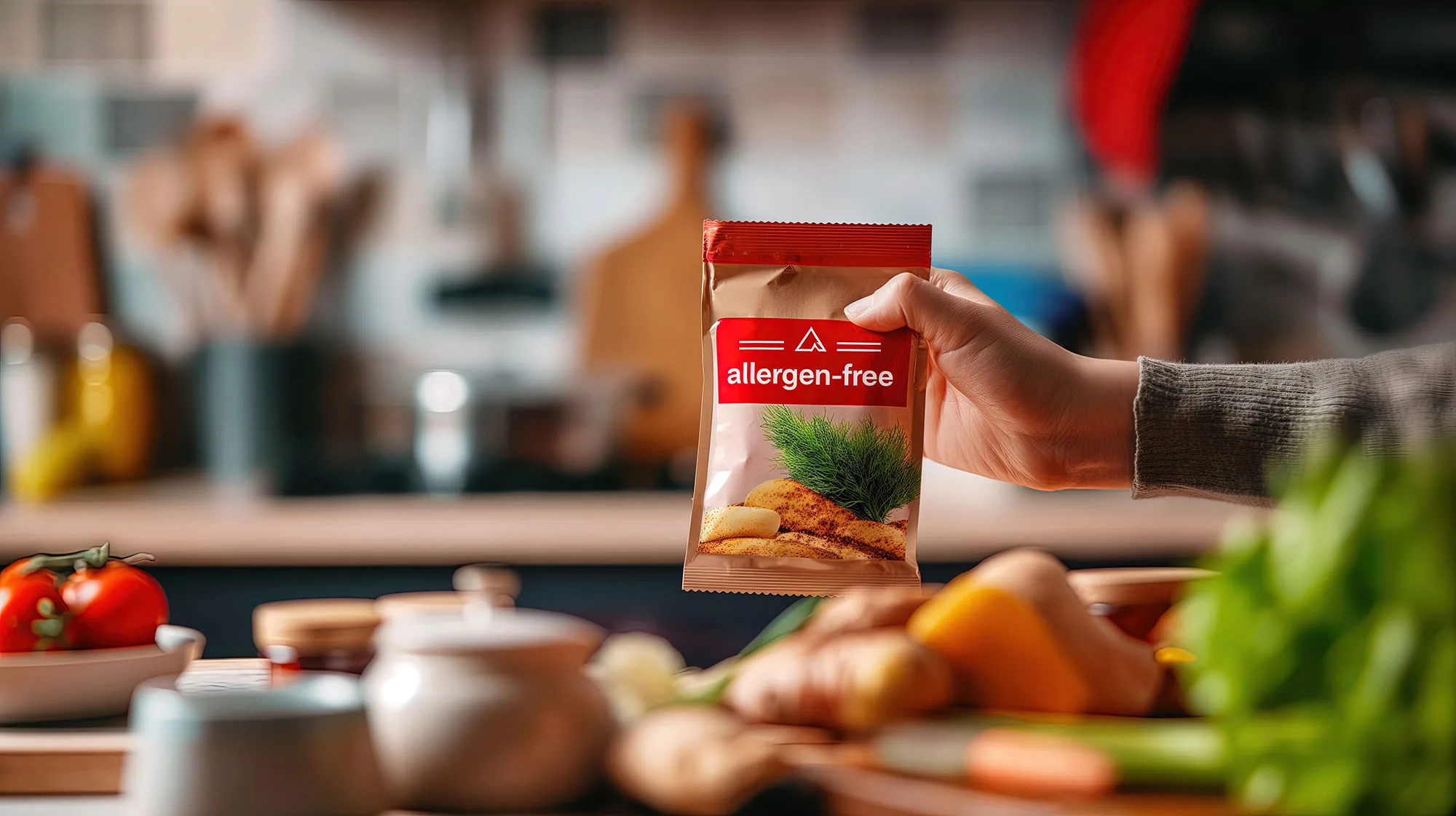
To comply with allergen labelling rules, you must name every major allergen in your food, clearly, on every label. The US and Canada each set their own allergen list and format, and Canada also requires English and French. Epson ColorWorks label printers help you print accurate allergen labels on demand.
Allergen labelling is more than a rule to follow. It protects your customers and your business. Food makers, processors and retailers must put accurate, clear allergen facts on every product.
At Ahearn & Soper Inc, we know it is hard to stay compliant and keep production moving. That is why we partner with Epson to offer ColorWorks label printers. They are built for the demands of food labelling.
What do the US and Canadian allergen rules require?
The two countries use different laws and different lists. If you sell in both, your labels must meet both.
United States (FDA)
The FDA names nine major food allergens: milk, eggs, fish, crustacean shellfish, tree nuts, peanuts, wheat, soybeans and sesame [1]. The Food Allergen Labeling and Consumer Protection Act (FALCPA) set the first eight. The FASTER Act added sesame, starting January 1, 2023 [1]. Since January 2025, FDA guidance no longer treats coconut as a tree nut, and it counts milk from goats and sheep and eggs from ducks and quail as major allergens [2].
You must name the food source of each allergen at least once. You can put it in brackets after the ingredient, as in "flour (wheat)". Or you can use a "Contains" statement right after or next to the ingredient list [1]. Required label text must be in English [3].
Canada (Health Canada and CFIA)
FALCPA does not apply in Canada. Here, the rules come from the Food and Drug Regulations and the Safe Food for Canadians Regulations [5][6].
Health Canada's priority food allergens are eggs, milk, mustard, peanuts, crustaceans and molluscs, fish, sesame seeds, soy, sulphites, tree nuts, and wheat and triticale [4]. Gluten sources must also be declared [4].
You can name them in the list of ingredients or in a "Contains" statement. The statement goes right after the list of ingredients. If you use one, it must list every allergen, gluten source and added sulphite in the food [5].
The list of ingredients must be in both English and French, unless the product is exempt [5]. All mandatory information on a consumer prepackaged food label must be in both official languages [6].
What must a compliant allergen label include?
- Every allergen, every time. In the US, there is no minimum amount. Any major allergen added to a food must be declared [2]. In Canada, added sulphites must be declared at 10 ppm or more [5].
- Text people can read. In the US, a "Contains" statement must use the same type size as the ingredient list [2]. Canada sets rules for the font, type size and contrast of the list of ingredients [5].
- The right place. Both countries put the "Contains" statement right after or next to the ingredient list [1][5]. A fixed spot also helps shoppers find it fast.
- Traceability records. Keep records that show where each lot came from and where it went. In Canada, the Safe Food for Canadians Regulations require these records to be kept for two years [7]. In the US, the FDA will not enforce its Food Traceability Rule before July 20, 2028, and it covers only foods on its Food Traceability List [8].
How do ColorWorks printers help with allergen labelling?
Epson ColorWorks label printers give food makers precise, reliable and flexible labelling. They are industrial printers built for busy production lines where accuracy matters.
High resolution printing keeps allergen warnings sharp, even in the small type that tight packaging needs. Clear text protects consumers and supports compliance.
Variable data printing lets you change allergen details in real time. You can match each label to a recipe or a seasonal ingredient. This helps prevent label errors that lead to recalls and penalties.
Durable, chemical resistant labels stay intact from production to the store shelf. ColorWorks printers work with food grade label stock. It resists moisture, oil and the temperature swings of food plants.
Can ColorWorks printers connect to our production systems?
Yes. ColorWorks printers connect with your current production management systems. Labels can print automatically from your recipes and ingredient databases.
Real time checks help catch errors before products leave the plant. Quality control features can spot print faults or missing details that could break compliance.
Batch tracking supports traceability. Each label can carry a unique ID. It links the product to ingredient sources, production dates and quality records.
You can also change label content fast. That helps you respond to supplier changes, seasonal ingredients or new rules without stopping production.
What happens if an allergen label is wrong?
Breaking FDA or CFIA allergen rules can lead to recalls, warnings, civil penalties and lasting harm to your brand. Recalls are costly. In a 2011 industry survey, 77% of food companies that had a recall put the financial impact at up to USD 30 million [9].
ColorWorks printers lower that risk with consistent, accurate labels that meet the rules. Reliable printing means fewer errors that could cause a compliance failure.
Built in quality checks help find problems before labels go on products. This early check supports your wider food safety program.
What support does Ahearn & Soper provide?
Ahearn & Soper Inc supports you through the full ColorWorks rollout. We look at your labelling needs, production volume and systems. Then we recommend the right printer setup.
Our team installs the printers and trains your staff, so you get full value from day one. Ongoing technical support keeps the printers running well and fixes problems as they come up.
Regular maintenance keeps your printers at their best. It cuts downtime and keeps label quality steady. Our local service network responds fast to issues that could slow production.
Will ColorWorks printers keep up as allergen rules change?
Allergen rules keep changing as science and public awareness grow. The FDA and CFIA update their guidance. They may add allergens or new warning formats.
ColorWorks printers are flexible enough to adapt. Software updates and custom label formats let you meet new rules without new equipment.
Supply chains are getting more complex, and shoppers expect more openness. That makes reliable labelling technology more important each year. ColorWorks helps you meet today's rules and get ready for the next ones.
Ready to make allergen labelling easier?
Allergen compliance takes more than good intentions. It takes reliable technology that prints accurate labels under real production pressure. Epson ColorWorks printers, backed by Ahearn & Soper Inc, help you protect consumers, follow the rules and keep production efficient.
Don't let labelling become a bottleneck or a risk. Contact Ahearn & Soper Inc to learn how ColorWorks can strengthen your allergen labelling program.
Frequently asked questions
How many major food allergens must US labels declare?
Nine. The FDA lists milk, eggs, fish, crustacean shellfish, tree nuts, peanuts, wheat, soybeans and sesame. Sesame was added on January 1, 2023.
Do Canadian allergen labels have to be in English and French?
Yes. The list of ingredients must be in both English and French unless the product is exempt, and all mandatory label information must be in both official languages.
Can ColorWorks printers change allergen details without stopping production?
Yes. Variable data printing lets you update allergen details in real time, so you can respond to recipe, supplier or rule changes without stopping the line.
Sources
- US Food and Drug Administration, "Food Allergies" (major food allergens, FASTER Act, how to declare).
- US Food and Drug Administration, "Questions and Answers Regarding Food Allergens, Including the Food Allergen Labeling Requirements of the FD&C Act (Edition 5)", questions A.4, D.6 and D.8.
- eCFR, 21 CFR 101.15(c), required label information in English.
- Health Canada, "Common food allergens" (priority food allergens).
- Canadian Food Inspection Agency, "List of ingredients and allergens" (Food and Drug Regulations B.01.008.1, B.01.010.1 to B.01.010.3, B.01.012).
- Canadian Food Inspection Agency, "Bilingual food labelling" (Safe Food for Canadians Regulations, section 206).
- Canadian Food Inspection Agency, "Traceability" (Safe Food for Canadians Regulations, sections 90 and 91).
- US Food and Drug Administration, "FSMA Final Rule on Requirements for Additional Traceability Records for Certain Foods".
- Grocery Manufacturers Association, with Covington & Burling and Ernst & Young, "Capturing Recall Costs: Measuring and Recovering the Losses", October 2011.
Articles you might read next
Three more reads on accuracy, labelling, traceability and the systems underneath them.


Ready to talk about your operation?
Tell us what your warehouse has to do, and we will tell you plainly whether we can help.