Moving beyond AI readiness to redesign talent for performance around AI collaboration
AI no longer waits for organizations to be ready for it. The next frontier is redesigning roles, teams, and performance models around AI collaboration, vertical by vertical.
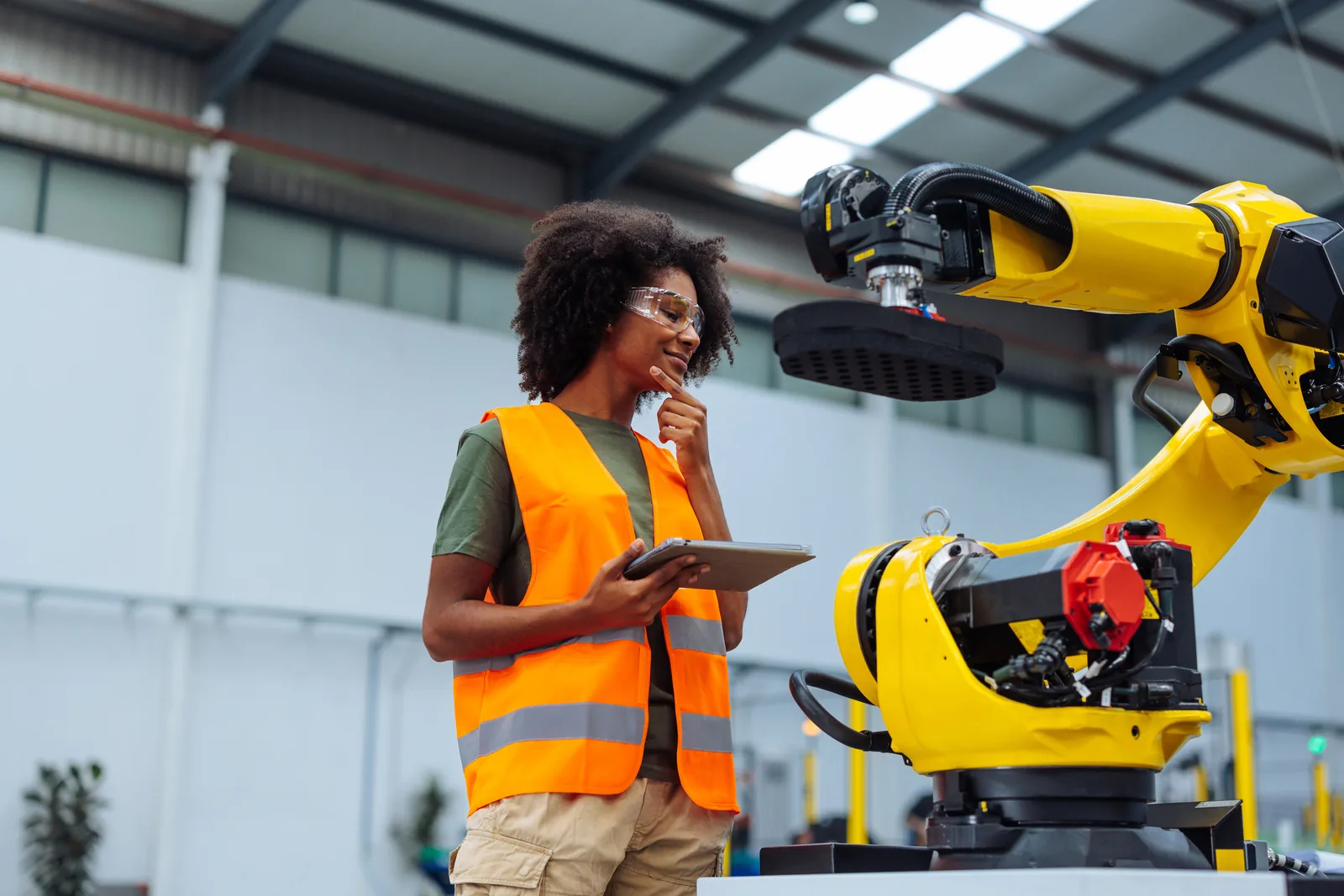
For the past several years, the conversation in distribution centres, manufacturing plants, hospitals, and logistics hubs has revolved around a single question: Are we AI-ready? Leadership teams have invested in assessments, pilot programs, and proof-of-concept projects. Data has been cleaned. Platforms have been benchmarked. Boards have been briefed.
And yet, "readiness" is starting to feel like a destination that keeps moving. Because AI no longer waits for organizations to be ready for it. It is already on the floor, in the rack, in the operating room, and on the dock. The next strategic frontier is no longer preparing people for AI, it is redesigning roles, teams, and performance models around AI collaboration.
For the verticals Ahearn & Soper has served for five decades, warehousing and distribution, manufacturing, healthcare, and logistics and 3PL, this shift is not theoretical. It is reshaping who gets hired, what they do all day, and how their performance is measured.
From "AI-ready workforce" to "AI-collaborative workforce"
The readiness mindset asks: Do our people have the skills to use AI tools when we deploy them?
The collaboration mindset asks something more ambitious: How do we redesign the work itself so humans and AI systems each do what they do best, in concert?
That distinction matters. Readiness treats AI as a piece of software to be adopted. Collaboration treats AI as a teammate to be onboarded, supervised, corrected, and trusted with progressively more responsibility. The former is an IT initiative. The latter is an operating model decision.
Companies that lean into the collaborative model are finding that the highest-performing roles are no longer the most technically specialized or the most physically efficient. They are the roles best positioned at the seam between human judgment and machine output.
What's changing vertical by vertical
Warehousing and distribution
The warehouse has always been a productivity-driven environment, where labour standards, pick rates, and SKU velocity define performance. AI-driven slotting engines, computer-vision quality checks, and predictive labour-planning tools are now reshaping that picture.
The pure "picker" or "packer" job is not disappearing, but it is increasingly augmented by wearables, scanners, and voice-directed systems that route work in real time. The roles growing fastest are exception handlers, workflow orchestrators, and data-feedback specialists who close the loop between what the AI predicts and what happens on the floor. A modern WMS no longer just records work, it recommends it. The talent advantage now belongs to people who can interpret those recommendations, push back when they're wrong, and feed the system the context it lacks.
Manufacturing
On the production side, AI is showing up in predictive maintenance, vision-based error proofing, work-in-process tracking, and adaptive scheduling. The classic line operator role is splitting in two directions: a smaller pool of highly skilled technicians who can interpret machine telemetry and an expanding pool of cross-functional operators who move fluidly between stations as AI rebalances the line.
The new performance currency is not just throughput, it is response time to anomalies. Operators who can read a flagged defect, validate the AI's call, intervene at the right point, and document the root cause are becoming the linchpins of OEE (Overall Equipment Effectiveness). Manufacturing leaders are quietly rewriting job descriptions, performance reviews, and training paths to reflect this.
Healthcare and life sciences
Few sectors carry higher stakes for AI collaboration than healthcare. Positive patient identification, medication administration, specimen tracking, and asset management are all being reshaped by intelligent systems layered on top of barcode and RFID infrastructure.
Here the talent shift is profound. Clinicians and clinical support staff are spending less time on data entry and more time on verification, exception management, and patient interaction. The new high-performing healthcare worker is one who trusts the AI enough to delegate routine documentation but is skilled enough to recognize when the system is wrong, and confident enough to override it. In life sciences manufacturing and lab environments, the same pattern holds: AI handles the volume, humans own the judgment calls that affect compliance, safety, and patient outcomes.
Logistics, 3PL, and transportation
Third-party logistics providers are operating in arguably the most AI-saturated environment of all. Routing optimization, dynamic pricing, demand forecasting, and yard management are increasingly handled by algorithms that learn faster than any planner can.
The talent profile in 3PL is shifting from executors of plans to managers of algorithms. Dispatchers, planners, and customer service teams are evolving into roles that look more like air-traffic control: monitoring AI-generated decisions across hundreds of shipments, intervening when conditions change, and constantly tuning the inputs that shape future recommendations. The premium skill is no longer route knowledge, it is systems thinking and the ability to communicate clearly with both customers and machines.
Automotive
Automotive supply chains are particularly demanding because of just-in-time pressure, traceability requirements, and the cost of a single line stoppage. AI is now embedded in supplier scoring, parts traceability, error proofing, and inbound logistics sequencing.
The roles that are gaining strategic value are those that bridge the OEM, tier suppliers, and the data layer between them. Quality engineers, supply chain analysts, and shopfloor leads who can work fluently with AI-generated insights, and translate them into supplier conversations and corrective actions, are increasingly the ones being promoted.
The common thread: a new performance profile
Across every vertical Ahearn & Soper supports, a consistent talent profile is emerging. The high performers of the next decade share four traits:
Judgment under uncertainty. AI produces probabilities, not certainties. The best operators, clinicians, planners, and technicians know when to trust the model and when to override it.
Data fluency without data science. Most frontline workers will not write code. But they will need to read dashboards, interpret confidence scores, and understand why a system is recommending what it is recommending.
Process redesign instinct. When AI changes what is automatable, every workflow needs to be rethought. The talent advantage goes to people who naturally ask, should we still be doing this the same way?
Collaboration with non-human teammates. The soft skill of the AI era is the ability to work alongside systems that don't get tired, don't take feedback personally, but also don't understand context the way humans do. That is a learned competency, not an innate one.
What this means for leaders
If your organization is still asking whether it is "AI-ready," the more useful question is probably this: Have we redesigned our roles, performance metrics, and training programs to reflect how work actually gets done now that AI is in the loop?
That is a harder question. It cannot be answered with a vendor demo or a pilot project. It requires honest conversations about which tasks should remain human, which should be delegated to systems, and which should be done collaboratively, and then rebuilding job descriptions, KPIs, and incentive structures to match.
For 50 years, Ahearn & Soper has been embedded in the operations of warehouses, factories, hospitals, and logistics providers across North America. What we are seeing today is not a disruption of those operations, it is a redefinition of the people inside them. The technologies we deploy are only as effective as the talent strategies that surround them.
The organizations that move beyond readiness, and start designing intentionally for AI collaboration, will not just adopt new tools. They will reshape what high performance looks like in their industry and define the talent benchmarks others will spend the next decade trying to catch up to.
Ahearn & Soper Inc. has been a trusted supply chain technology partner since 1975, helping organizations in distribution, manufacturing, healthcare, and logistics improve accuracy, traceability, and operational performance. To explore how your team can redesign workflows around modern automation and intelligent systems, contact us.
Articles you might read next
Three more reads on accuracy, labelling, traceability and the systems underneath them.


Ready to talk about your operation?
Tell us what your warehouse has to do, and we will tell you plainly whether we can help.