The High-Stakes World of Aviation Maintenance Labeling
In Canadian Maintenance, Repair, and Overhaul (MRO) facilities, every component label, maintenance record, and identification tag plays a critical role in aviation safety. When aircraft maintenance documentation fails, the consequences extend far beyond regulatory compliance—they can ground entire fleets and compromise passenger safety. Transport Canada’s stringent aviation regulations demand labels that maintain perfect legibility through years of exposure to extreme conditions, from Arctic cold snaps to the scorching heat of tarmac summers.
The challenge facing MRO facilities is formidable: create durable labels that survive jet fuel spills, repeated exposure to de-icing chemicals, temperature swings from -40°C to +120°C, and the constant vibration and stress of flight operations—all while maintaining barcode scannability and human-readable information for rapid maintenance operations.
Why Industrial-Grade Printing Infrastructure Matters in Aviation
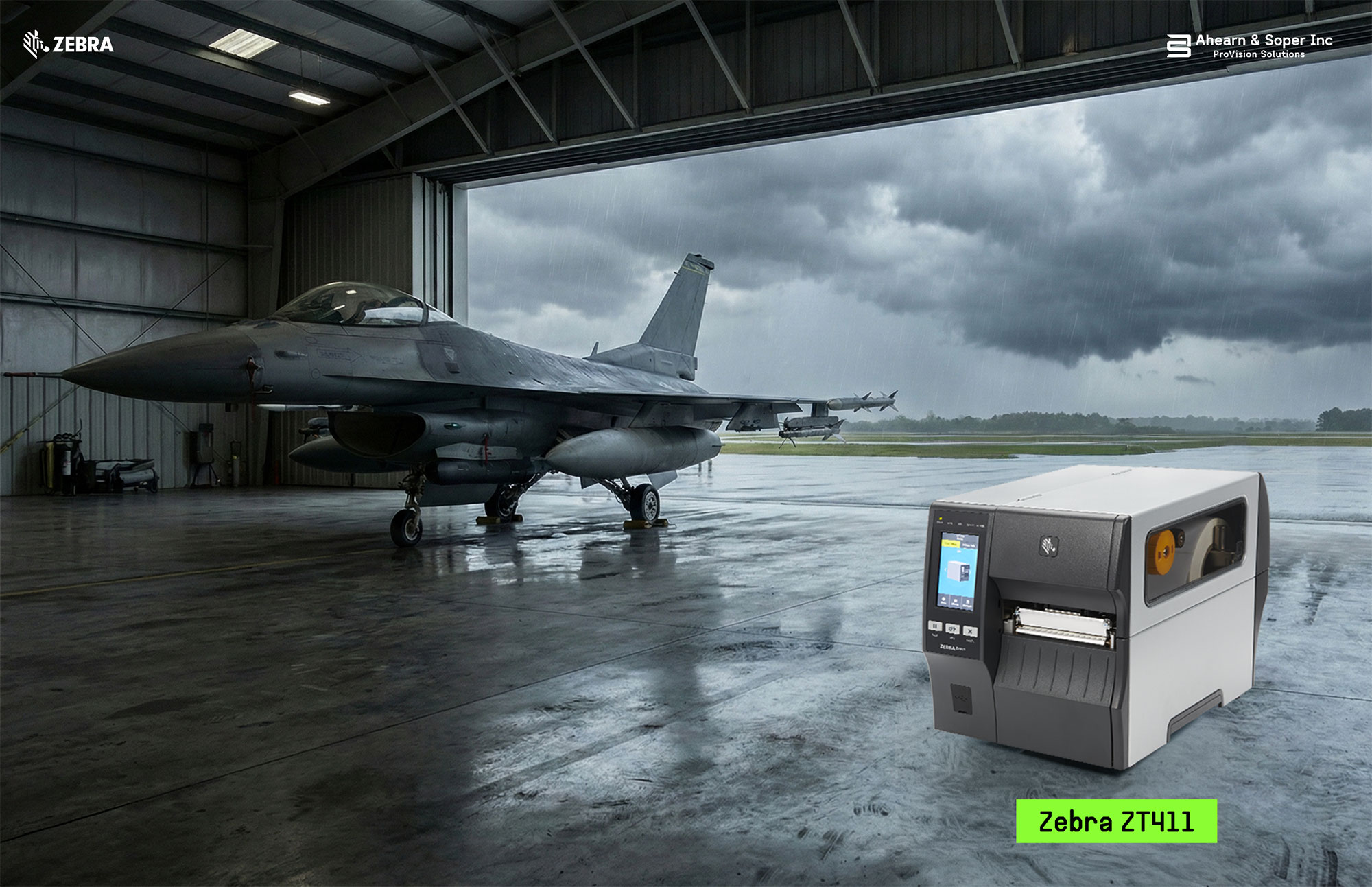
Aircraft maintenance isn’t a forgiving environment for standard office equipment. Hangar floors see hydraulic fluid, lubricants, and cleaning solvents daily. Temperature fluctuations stress materials and adhesives. Regulatory requirements from Transport Canada and international aviation authorities demand multi-decade label durability. This is where the Zebra ZT400 Series, available through ProVision Labels by Ahearn & Soper Inc., transforms maintenance operations.
All-Metal Construction: Built for the Hangar Environment
The ZT400 Series features robust all-metal construction designed to withstand the demanding conditions of MRO facilities. Unlike plastic-housed printers that crack under stress or degrade in chemical-laden environments, the ZT400’s industrial frame handles:
· Impact resistance from busy maintenance environments where tools and parts are constantly in motion
· Chemical exposure from cleaning agents, solvents, and lubricants common in aircraft hangars
· Temperature stability maintaining print quality accuracy whether positioned near loading docks in winter or in climate-controlled component shops
· Vibration tolerance essential for facilities near active runways or in buildings with heavy equipment operations
This durability translates directly to reduced downtime. When your printer is built to match the ruggedness of the aircraft you’re maintaining, maintenance tracking doesn’t stop for equipment failures.
Remote Printer Management: Control Across Your Entire MRO Operation
Modern MRO facilities often span multiple buildings, hangars, and sometimes multiple airport locations. The ZT400 Series delivers enterprise-grade remote management capabilities that transform how Canadian aviation maintenance teams oversee their labeling infrastructure.
Centralized Fleet Management Through Print DNA
Zebra’s Print DNA suite enables IT administrators and maintenance supervisors to:
· Monitor printer status across all locations from a single dashboard
· Receive proactive alerts before ribbon or label supplies run out during critical maintenance windows
· Deploy firmware updates simultaneously across your entire printer fleet without physical access
· Track usage patterns to optimize label inventory and identify training opportunities
· Diagnose issues remotely reducing technician travel time between buildings or facilities
For MRO operations coordinating component overhauls, line maintenance, and heavy checks simultaneously, this visibility prevents the bottleneck of a single offline printer from delaying aircraft return-to-service schedules.
Integration with Aviation Maintenance Management Systems
The ZT400 Series supports seamless connectivity with industry-standard maintenance management platforms including SAP Aviation, Ramco Aviation, and IFS Maintenix. With both Wi-Fi and Ethernet connectivity options, integration architecture becomes flexible:
· Ethernet connections provide rock-solid reliability for fixed stations in component shops and quality control areas
· Wi-Fi connectivity enables mobile printing carts that follow aircraft through maintenance bays
· Multiple protocol support (including ZPL, EPL, and XML) ensures compatibility with legacy and modern software systems
· Print server integration allows centralized job queuing and print verification
This connectivity means maintenance technicians scan a component barcode, and the system automatically generates and prints the appropriate tracking label without manual data entry—eliminating transcription errors that could compromise maintenance records.
Synthetic Label Materials: Engineering for Extreme Aviation Environments
The ProVision Labels by Ahearn & Soper Inc. portfolio includes specialized synthetic label materials specifically engineered for aviation applications. These aren’t standard paper labels—they’re advanced polymer constructions designed to outlast the components they identify.
Chemical Resistance That Protects Critical Information
Aviation maintenance involves constant exposure to aggressive chemicals:
· Jet fuel (Jet A, Jet A-1) which dissolves many standard adhesives and label materials
· De-icing fluids (Type I-IV) with glycol-based formulations that penetrate porous materials
· Skydrol hydraulic fluid notorious for degrading plastics and standard label stocks
· MEK and acetone-based cleaners used for surface preparation and paint removal
· Corrosion inhibitors and protective coatings applied during component overhauls
ProVision’s synthetic polyester and polypropylene label materials maintain print integrity and barcode scannability even after direct chemical exposure. Independent testing shows these materials retain UL/CSA approval ratings and maintain their Grade A barcode quality after chemical immersion testing.
Temperature Extremes: From Arctic Ramps to Engine Bay Heat
Canadian MRO facilities face temperature challenges that few other industries encounter:
Cold weather performance (-40°C to 0°C):
· Labels must remain adhered to aluminum and composite surfaces during outdoor maintenance
· Adhesives can’t become brittle or lose tack during extended cold soaks
· Barcode contrast must remain scannable even with frost accumulation
· Material flexibility prevents cracking during handling in freezing conditions
High temperature resistance (+80°C to +120°C):
· Engine component labels endure sustained heat from nearby powerplants
· Brake assembly identification survives heat cycles from landing operations
· APU compartment labels withstand continuous elevated temperatures
· Autoclave-processed composite repair labels maintain integrity through cure cycles
ProVision’s synthetic materials are specifically selected for their thermal stability across this entire range, with specialty adhesives that maintain bond strength whether the aircraft just landed from Iqaluit in February or completed a Phoenix turnaround in August.
Specialty Ribbon Technology: The Final Link in Chemical-Resistant Labeling
Even the most durable synthetic label material fails if the printed image washes away. The ZT400 Series’ specialty ribbon compatibility ensures that what you print today remains readable throughout the component’s service life.
Resin Ribbons for Maximum Chemical Resistance
ProVision Labels recommends and supplies premium resin ribbons specifically formulated for aviation applications:
· Chemical resistance to hydrocarbon solvents, alcohols, and alkaline cleaning solutions
· Abrasion resistance preventing wear from repeated handling and surface contact
· Temperature stability maintaining image integrity through thermal cycling
· UV resistance preventing fade on exterior-mounted identification labels
Unlike wax or wax-resin ribbons that may suffice for warehouse applications, resin ribbons create a molecular bond with synthetic label materials that withstands the aggressive chemical exposure inherent to aircraft maintenance.
Print Quality That Meets Aviation Standards
Transport Canada and FAA regulations require maintenance records to remain legible and scannable throughout component life cycles that may span 20+ years. The ZT400 Series with appropriate ribbon configurations delivers:
· 300 dpi resolution ensuring small text and complex 2D barcodes remain readable
· Consistent edge definition critical for DataMatrix and PDF417 codes used in part tracking
· Uniform density preventing barcode read errors that could delay maintenance sign-offs
· Smudge-proof imaging essential when labels are handled with gloved hands and aviation fluids
This combination of printer precision and ribbon technology ensures the labels printed today will still scan perfectly when that component comes back for its next scheduled maintenance cycle years from now.
Real-World Applications in Canadian MRO Operations
The integration of Zebra ZT400 Series printers with ProVision Labels’ synthetic materials supports critical aviation maintenance workflows:
Component Tracking and Traceability
· Landing gear overhaul facilities print durable labels that follow components through disassembly, inspection, refurbishment, and reassembly
· Each process step generates time-stamped, barcode-linked documentation that survives chemical cleaning and preservation processes
· Labels maintain scannability after parts spending months in preservation before installation
Aircraft Structure and Systems Identification
· Permanent identification labels for access panels, systems, and emergency equipment must survive decades of flight operations
· Exterior labels endure UV exposure, temperature cycling, and repeated washing with industrial detergents
· Interior labels resist cleaning chemicals while maintaining aesthetic appearance in passenger-visible areas
Tool and Equipment Management
· Foreign Object Debris (FOD) prevention requires rigorous tool control with barcode tracking
· Equipment labels survive tool crib environments with metal chips, coolants, and cleaning solvents
· Calibration labels maintain legibility through the equipment’s service life
Regulatory Compliance Documentation
· Work order documentation labels that become permanent aircraft records
· Certification labels for completed inspections and repairs
· Serialized component identification supporting airworthiness directives compliance
The ProVision Labels Advantage: Canadian Aviation Expertise
ProVision Labels by Ahearn & Soper Inc. brings decades of Canadian industrial labeling experience specifically to aviation applications. Their partnership with Zebra Technologies delivers:
Technical Consultation and Material Selection
Not every aviation labeling application is identical. ProVision’s technical team works with MRO facilities to:
· Analyze specific chemical exposure profiles in your facility
· Test label materials against your actual maintenance fluids and processes
· Recommend optimal printer configurations for your maintenance management system
· Design custom label formats that meet Transport Canada documentation requirements
Comprehensive Training and Support
Implementation success requires more than equipment delivery. ProVision provides:
· On-site printer installation and network integration assistance
· Maintenance technician training on proper label application techniques
· IT staff training on remote printer management and troubleshooting
· Ongoing technical support from staff who understand aviation maintenance requirements
Supply Chain Reliability for Mission-Critical Operations
Aircraft on ground (AOG) situations can’t wait for label supplies. ProVision maintains:
· Inventory of aviation-grade synthetic materials and resin ribbons
· Fast-track ordering for critical maintenance operations
· Technical data sheets and regulatory compliance documentation
· Lot traceability for quality assurance requirements
Implementing ZT400 Series Solutions in Your MRO Facility
Transitioning to industrial-grade labeling infrastructure requires planning but delivers immediate operational benefits:
Assessment Phase
1. Audit current labeling pain points and failure modes
2. Map label requirements across component shops, line maintenance, and administrative areas
3. Evaluate network infrastructure for Wi-Fi and Ethernet printer connectivity
4. Review maintenance management system integration requirements
Implementation Phase
1. Deploy pilot ZT400 printers in high-volume areas
2. Test label materials against facility-specific chemicals and temperature profiles
3. Configure remote management and integrate with maintenance management systems
4. Train maintenance technicians and quality inspectors on new workflows
Optimization Phase
1. Analyze printer utilization and label consumption patterns
2. Expand deployment to additional locations based on pilot success
3. Refine label designs based on technician feedback
4. Establish preventive maintenance schedules for printer fleet
Meeting Transport Canada Requirements with Confidence
Canadian aviation regulations demand maintenance record permanence that protects airworthiness over component service lives measuring decades. The combination of Zebra ZT400 Series industrial printers and ProVision Labels’ synthetic materials delivers:
· Regulatory compliance with Transport Canada documentation requirements
· Long-term durability that protects maintenance record integrity
· Operational reliability that keeps aircraft moving through maintenance cycles
· Integration capability that connects labeling with maintenance management systems
· Chemical and temperature resistance proven in real-world aviation environments
Conclusion: Building Aviation Maintenance Infrastructure That Lasts
In Canadian MRO facilities where winter temperatures plummet to -40°C and summer tarmac heat reaches extreme levels, where de-icing chemicals flow freely and jet fuel exposure is inevitable, aviation maintenance labeling can’t be an afterthought. The Zebra ZT400 Series printers, paired with ProVision Labels’ synthetic materials and resin ribbons, deliver an industrial-grade solution engineered specifically for the demanding aviation environment.
From component tracking through overhaul cycles to permanent aircraft identification labels that last decades, this labeling infrastructure ensures that critical maintenance information survives the journey from hangar to sky—and back again—maintaining the readability and scannability that aviation safety demands.
For Canadian MRO facilities ready to upgrade from consumer-grade equipment and standard paper labels to industrial printing solutions that match the durability of the aircraft they maintain, the path forward is clear: robust metal construction, remote management capability, network connectivity, and chemical-resistant synthetic materials working together to protect the maintenance records that keep Canadian aviation safe.
Ready to upgrade your MRO facility’s labeling infrastructure? Contact ProVision Labels by Ahearn & Soper Inc. to discuss your specific aviation maintenance labeling requirements and discover how Zebra ZT400 Series solutions can transform your maintenance documentation processes.
 FR
FR  EN
EN