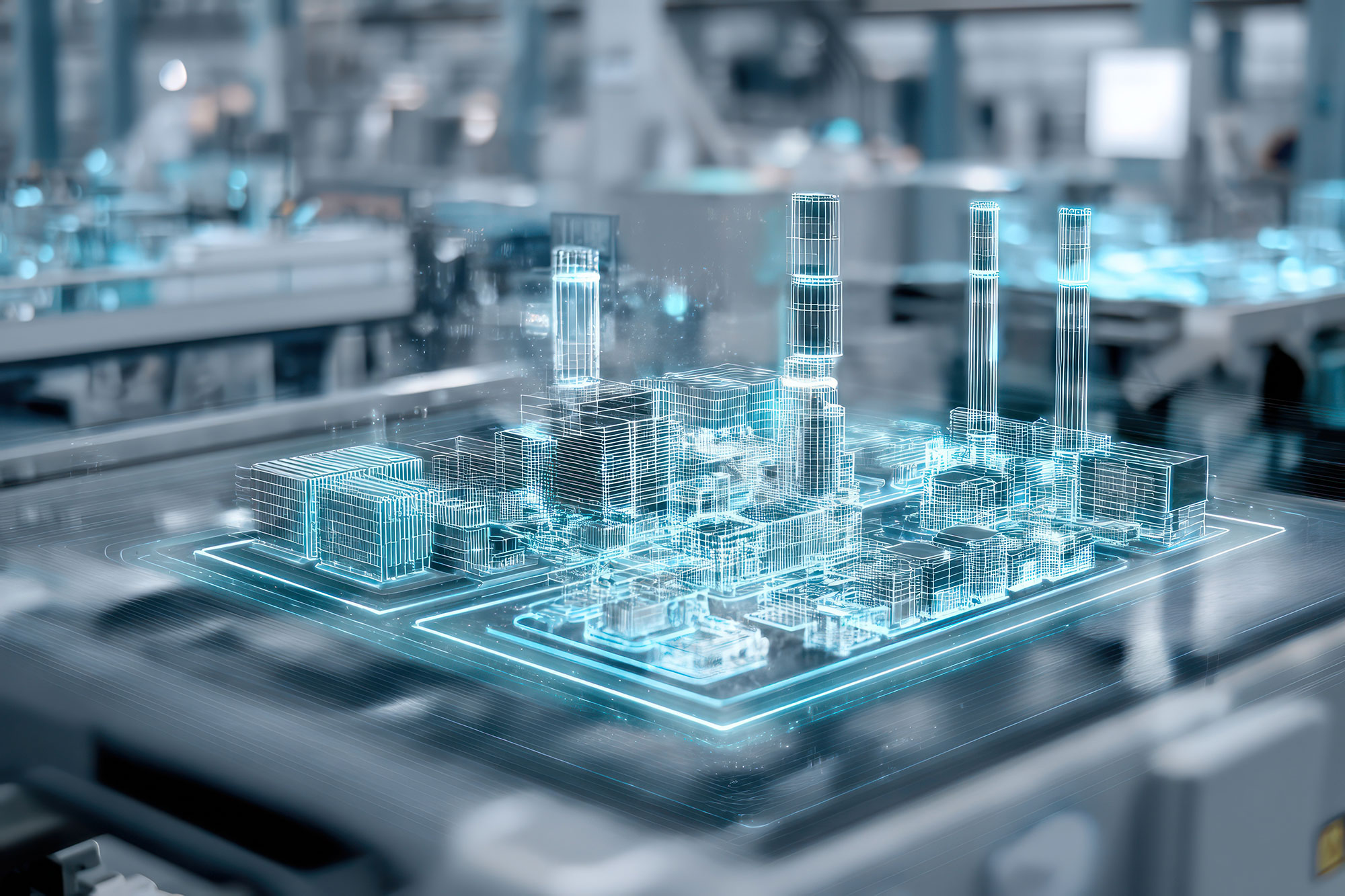
The factory floor has found its virtual counterpart, and the results are transforming how manufacturers operate. Digital twins, precise virtual replicas of physical production systems, have evolved from simple 3D models into sophisticated AI-powered environments where manufacturers can experiment, optimize, and troubleshoot without risking a single minute of production downtime.
What Makes AI-Enhanced Digital Twins Different?
Traditional digital twins provided visualization and basic simulation. Today’s AI-enhanced versions go several steps further. They learn from historical data, predict future performance, and recommend optimizations that human operators might never consider. Think of it as the difference between a photograph and a living, breathing entity that grows smarter with every production cycle.
These intelligent replicas consume data from sensors, PLCs, MES systems, and quality control checkpoints across your production line. Machine learning algorithms process this information to create a virtual twin that doesn’t just mirror your current state; it anticipates what comes next.
Testing Without Consequences
Here’s where the real value emerges. Before you adjust a robot’s speed, modify a conveyor timing, or implement a new production sequence, you can test it virtually. The AI-enhanced digital twin runs the scenario thousands of times in minutes, revealing bottlenecks, safety concerns, or efficiency gains you wouldn’t discover until weeks into physical implementation.
A mid-sized automotive parts manufacturer recently used this approach to test a line reconfiguration that promised 15% throughput improvement. The digital twin revealed that while the new layout increased speed in one area, it created a downstream bottleneck that would have reduced overall output by 8%. They refined the design virtually, tested again, and ultimately achieved a 22% improvement, all before moving a single piece of equipment.
Predictive Troubleshooting Changes the Game
AI doesn’t just replicate current conditions; it predicts future ones. By analyzing patterns in vibration data, temperature fluctuations, cycle times, and quality metrics, these systems can flag potential failures before they occur. Your digital twin might alert you that a servo motor will likely fail in 72 hours based on degradation patterns, giving you time to schedule maintenance during a planned downtime rather than facing an emergency stoppage.
This predictive capability extends beyond individual components. AI can identify subtle interactions between systems, how humidity affects adhesive cure times, or how ambient temperature impacts pneumatic actuator performance. These multi-variable relationships are nearly impossible for humans to track manually but become clear when AI processes millions of data points.
Workflow Optimization That Learns
Perhaps the most compelling application is continuous workflow optimization. Your digital twin runs countless virtual experiments during third shift when physical production continues uninterrupted. It tests different scheduling sequences, material flow patterns, and resource allocations, learning which combinations yield the best results.
One food processing facility implemented an AI-enhanced digital twin that continuously optimized their packaging line transitions. Product changeovers that previously took 45 minutes now complete in 28 minutes, not through one-time improvements, but through ongoing AI-driven refinements that adapt to seasonal products, staff experience levels, and equipment wear patterns.
Integration With Existing Systems
Modern digital twins don’t exist in isolation. They connect to your ERP system to understand production schedules, pull data from quality management systems to correlate defects with process parameters, and integrate with maintenance management platforms to factor in equipment health. This holistic view enables optimization decisions that consider the entire manufacturing ecosystem rather than isolated processes.
The beauty of this integration is that improvements discovered in the virtual environment translate directly into updated control parameters, HMI displays, and operator guidance on the physical floor. The gap between simulation and reality narrows until they’re essentially synchronized.
Getting Started Without Disrupting Production
Implementing digital twin technology doesn’t require shutting down operations. The process typically begins with one production cell or line segment. Sensors that may already exist for control purposes become data sources. Historical production data provides the training foundation for AI models. Within weeks, you can have a functioning digital twin running parallel to physical operations.
Start small, prove value, then expand. Many manufacturers begin with a specific challenge, reducing changeover time, improving first-pass yield, or extending equipment life. Once the digital twin demonstrates ROI on that focused application, extending it to adjacent processes becomes an easier business case.
The Competitive Advantage
Manufacturers using AI-enhanced digital twins report 20-30% reductions in unplanned downtime, 15-25% improvements in overall equipment effectiveness, and development cycles for process improvements that are 60% faster than traditional approaches. These aren’t marginal gains—they’re competitive advantages that compound over time.
As your digital twin accumulates more data and the AI models become more sophisticated, the optimization recommendations improve. You’re building an asset that becomes more valuable with age, unlike physical equipment that depreciates.
Looking Forward
The convergence of digital twins and AI represents more than an incremental improvement in manufacturing technology. It’s a fundamental shift in how we approach production optimization, moving from reactive troubleshooting and periodic improvements to continuous, predictive, and automated enhancement.
For manufacturers ready to move beyond gut feelings and periodic consultants, AI-enhanced digital twins offer a path to systematic, data-driven excellence. The virtual factory isn’t replacing the physical one, it’s making it smarter, more efficient, and more competitive than ever before.
ProVision Automation by Ahearn & Soper Inc. specializes in industrial automation solutions that help manufacturers leverage cutting-edge technologies like AI-enhanced digital twins. Contact us to explore how digital twin technology can optimize your production operations.
 FR
FR  EN
EN